
Does Your Workplace Require a Trauma First Aid Kit?
Published by Jax First Aid Supplies on 4th Mar 2026
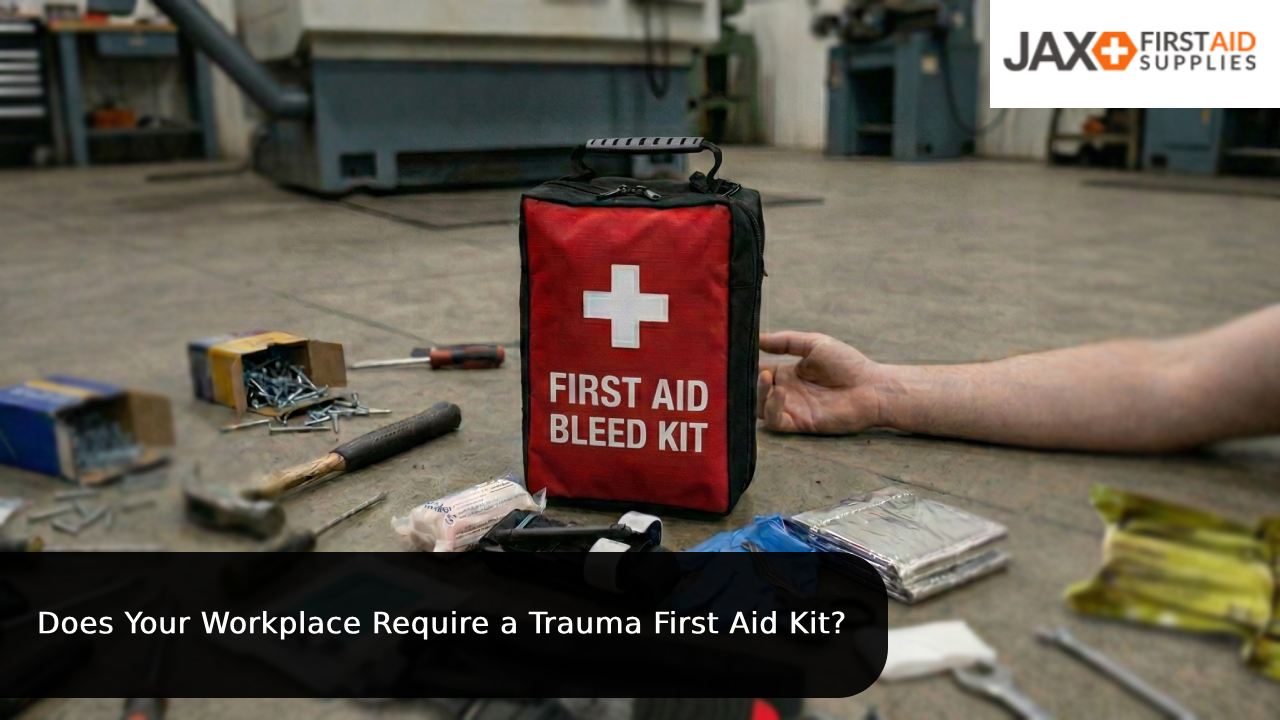
In any workplace, ensuring workplace safety is important. Understanding your organisation's first aid requirements according to your assessment of first aid, including adequate first aid measures, is a critical aspect of that. This article explores when a standard workplace first aid kit isn't enough, and when you may need to consider storing a trauma kit to deal with more serious injuries for your specific workplace. From legal obligations to practical considerations, we will assist you in assess your particular workplace's first aid needs.
Understanding First Aid Requirements in the Workplace
The Importance of First Aid at Work
Effective first aid cover at work is essential for quickly and effectively addressing injuries and illnesses, potentially helping to save lives and reducing long term health impacts, especially in emergency first aid at work scenarios. A well stocked workplace first aid kit, readily available first aiders, and appropriate and adequate first aid training requirements training help to contribute to a safer working environment for your particular workplace, minimising the severity of injuries incidents, as well as demonstrating a commitment to employee well-being. Supplying first aid supplies and basic first aid training through a first aid course is essential. The quantity of first aid supplies will vary for the needs of each workplace, however, by completing your risk assessment for your workplace, the contents of first-aid required become clearer.
Legal Obligations: Health and Safety Regulations
The Health and Safety Executive (HSE) sets the standards for comprehensive first aid provision in the workplace. Employers have a legal obligation, under the Health and Safety at Work etc. Act 1974 and the Health and Safety (First-Aid) Regulations 1981, to provide compliant first aid kit arrangements, ensuring right first aid provisions. This includes carrying out a first aid needs assessment to determine the specific first aid requirements of the workplace and ensuring compliant first aid.
Key First Aid Provisions for Employers
Employers are required to provide sufficient first aid equipment, including a suitable workplace first aid kit or first aid box, and ensure there are an adequate number of trained first aiders or at least one appointed person to take charge of first aid arrangements. The contents of the workplace first aid kit should be determined by a risk assessment, taking into account the specific hazards and risks present in your workplace and providing sufficient first aid equipment.
Assessing First Aid Needs
Conducting a First Aid Needs Assessment
A thorough first aid needs assessment is important for determining the appropriate first aid provision for every workplace. This assessment, guided by the Health and Safety Executive (HSE), should consider the nature of the work, potential hazards, and the number of employees. The first aid needs assessment will highlight whether a standard workplace first aid kit is sufficient or if additional first aid equipment, such as a trauma kit, is required to manage potential workplace safety issues.
Identifying Workplace Hazards and Risks
Identifying the potential hazards and risks based on your first aid assessment is crucial. Certain workplaces, for example construction sites or manufacturing facilities, often present a higher risk of serious injuries, including severe bleeds or burns. Understanding these risks helps to determine if trauma first aid kits, containing advanced first aid supplies such as tourniquets, are necessary in addition to standard workplace first aid arrangements, and to provide adequate first aid equipment, which the regulations 1981 require. A risk assessment should be part of every organisation's workplace safety planning.
Determining the Appropriate First Aid Supplies
Based on your risk assessment, employers must determine the appropriate level of first aid supplies and facilities and personnel for their workplace, to allow a fast, enhanced first aid response. This includes stocking an adequate number of first aid kits and first aid boxes, as well as specific items needed to address potential injuries identified in the assessment, in line with the first aid regulations. If the risk assessment indicates a potential for serious trauma, a trauma kit should be included as part of the overall first aid equipment. This is highly important to meet first aid requirements and comply with first aid regulations.
Different Types of Trauma and Bleed Control Kits
Not every UK workplace needs the same level of trauma response equipment. Depending on the risks identified in your first aid needs assessment, employers might choose from different types of trauma or bleed control kits. These emergency first aid kits are made to give immediate treatment for severe bleeding injuries before emergency services arrive.
Choosing the right trauma kit depends on factors such as the type of work being carried out, the level of public access to the workplace, and the potential hazards identified in your risk assessment.
Compact Bleed Control Kits
Compact bleed control kits are made for fast access and portability. These smaller first aid kits typically contain only the essential bleed management items such as a trauma dressing, haemostatic gauze, gloves, and a tourniquet.
Because they are lightweight and easy to store, compact bleed kits are especially useful in environments where space is limited or where mobile response is required. Security teams, lone workers, and vehicles often carry compact trauma kits so that bleed control equipment is easily available in an emergency.
Workplace Trauma First Aid Kits
A larger workplace trauma first aid kit gives a more comprehensive range of equipment made to manage serious injuries in higher risk environments. These trauma kits might include multiple trauma dressings, haemostatic gauze, tourniquets, burn dressings, PPE, and other essential emergency items.
They are commonly used in industries where there is an increased risk of severe injury, for example:
- Construction sites
- Manufacturing facilities
- Warehouses and logistics centres
- Engineering environments
- Event venues
Having a dedicated trauma kit available alongside a standard workplace first aid kit means that trained first aiders can respond more effectively to serious incidents while waiting for emergency medical services.
Public Access Bleed Control Kits
In recent years, public access bleed control kits, or PAcT kits, have become a lot more common in the UK. These kits are made to be easily accessible in public locations such as shopping centres, schools, sports venues, and transport hubs.
Public access kits are often installed in wall-mounted bleed control cabinets similar to automated external defibrillators (AED). Their purpose is to allow trained individuals or members of the public to access bleed control equipment fast during a major incident or traumatic injury.
Choosing the Right Trauma Kit for Your Workplace
When choosing which trauma kit is appropriate, employers should always refer back to their first aid needs assessment. The Health and Safety Executive (HSE) emphasises that first aid provision must be adequate and appropriate for the risks present in your specific workplace.
Key considerations might include:
- The likelihood of severe bleeding injuries
- The type of tools, machinery, or equipment being used
- The number of employees and visitors on site
- The distance from emergency medical services
- The level of first aid training available among staff
If your risk assessment identifies the potential for catastrophic bleeding or serious trauma, introducing a trauma or bleed control kit as well as your standard workplace first aid kit can significantly improve emergency preparedness.
What Should Be Included in a Trauma First Aid Kit?
Essential Items for Large First Aid Kits
A well equipped trauma kit/bleed kit differs from a standard workplace first aid kit and contains specialised emergency first aid items made to help manage severe injuries, adhering to first aid regulations. Large first aid kits should contain several categories of essential items, including safety first aid supplies.
- First aid supplies for bleed control, such as haemostatic dressings and tourniquets.
- Equipment for airway management and personal protective equipment (PPE) to allow the safety of first aiders.
First aid at work depends on having all these necessary first aid supplies available in the workplace.
Specific Supplies for Managing Bleeds and Burns
The accurate and effective management of severe bleeds and burns relies on having the right emergency first aid supplies readily available, especially in emergency first aid at work situations. A well stocked trauma kit is highly important, and should contain essentials such as trauma dressings.
- Wound dressings, including sterile burn dressings, to protect injuries should be part of the adequate first aid provisions.
- Appropriate bandages to control bleeding effectively are critical components of the right first aid provisions.
Additionally, haemostatic agents, such as quick clotting Celox granules or dressings, are critical for controlling severe bleeds while awaiting professional medical assistance. Remember, proper first aid training is essential for using this equipment accurately.
Additional Equipment for Emergency Situations
Here's what a trauma kit should include in addition to bleed and burn management supplies, equipment essential for a variety of emergency situations.
- A resuscitation mask for providing rescue breaths
- A foil blanket to prevent hypothermia is an essential item for enhanced first aid during emergency situations.
- A tuff cut shears for cutting away clothing to expose injuries
All first aid equipment should be inspected often, and maintained to make sure it is ready for use in an emergency. Every workplace must ensure this for compliant first aid and to provide adequate first aid equipment.
Emergency First Aid Training for Employees
Designating an Appointed Person for First Aid
Every workplace should designate at least one first aider to oversee first aid arrangements (more depending on the size and risk level of your workplace). This individual would be responsible for managing the first aid kits and first aid supplies; calling emergency services, and providing basic first aid assistance. The appointed person makes sure that the workplace's first aid provision is maintained, inspected, and that first aid equipment is readily available to meet first aid responsibilities. This means that the workplace meets its health and safety legal obligation regarding first aid in the workplace.
Benefits of First Aid Training in the Workplace
First aid training equips your employees with the adequate skills and knowledge to respond effectively in emergency situations, potentially helping to save lives and minimise further injuries. Investing in a first aid training course demonstrates a commitment to workplace safety, boosts employee morale, and means that trained first aiders are readily available to give immediate assistance during a first aid emergency. This training also means that your staff understand the first aid equipment within the first aid kit.