12 Common First Aid Myths Busted: Shocking Truths That Could Save Lives in the UK
Published by Jax First Aid Supplies on 25th Feb 2026
When emergencies inevitably happen, people tend to rely on the first aid advice that they think is correct. Unfortunately, a lot of widely believed ideas are simply incorrect and potentially dangerous. Understanding correct first aid techniques is not just helpful, but it can prevent serious harm and possibly even save lives.
Why does busting these first aid myths matter?
The Risk of Outdated Advice
First aid guidance and regulations are constantly evolving and updating. What your grandparents, or parents, were taught may no longer apply to injuries and scenarios. Social media and word-of-mouth can lead to the spread of outdated or unsafe advice.
Incorrect first aid technique can:
- Worsen injuries;
- Delay recovery;
- Increase infection risk;
- Create legal issues for employers.
UK First Aid Law and Employer Responsibilities
Under the Health and Safety at Work etc. Act 1974, employers must ensure, so far as reasonably practicable, the health, safety and welfare of their employees. The Health and Safety (First Aid) Regulations 1981 require adequate and appropriate first aid provision based on workplace risk assessment.
Further official guidance from the UK Health and Safety Executive (HSE) can be found here.
Myth 1: Put Butter on a Burn
Why is this dangerous?
Butter traps heat in the skin and actually increases infection risk.
Correct UK Treatment:
According to NHS guidance:
- Cool the burn under running water for at least 20 minutes
- Remove tight clothing or jewellery
- Cover loosely with cling film or sterile burn dressing
Never apply oils or creams immediately after sustaining a burn.
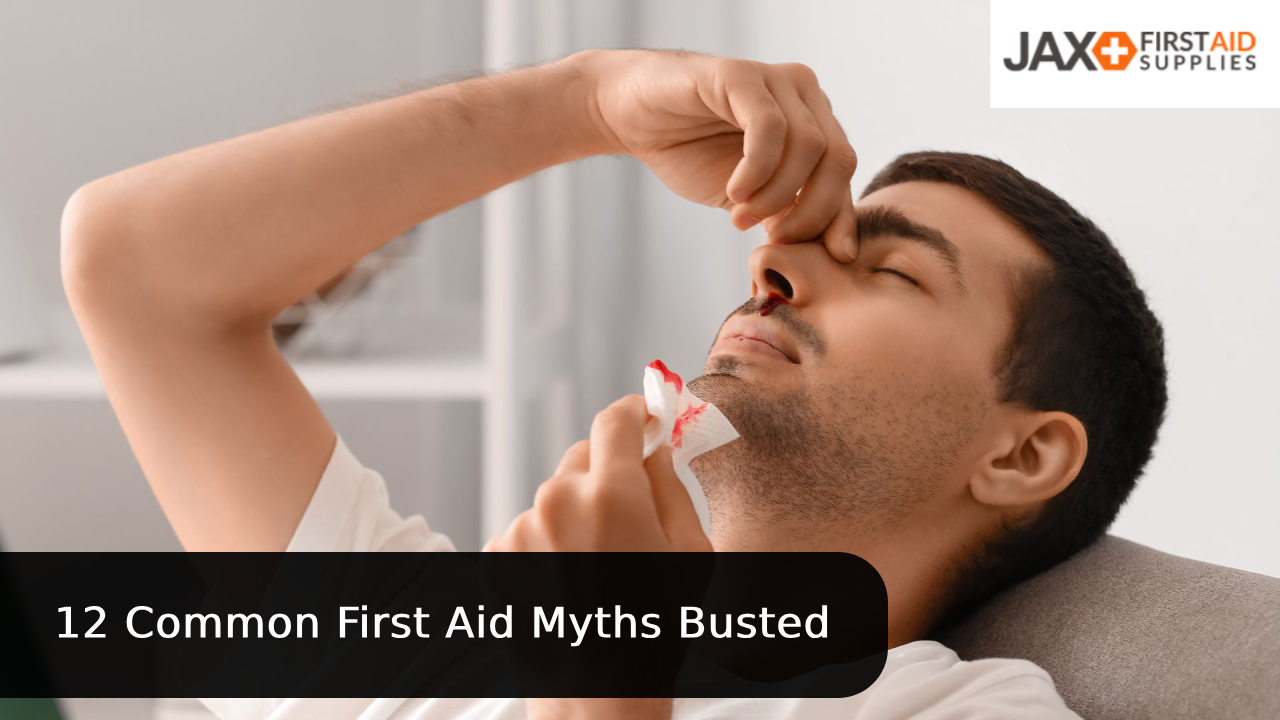
Myth 2: Tilt the Head Back During a Nosebleed
The Real Risk
Tilting the head back during a nosebleed causes blood to flow into the throat, which could lead to choking or vomiting.
Correct Advice
- Sit upright
- Lean forward
- Pinch the soft part of the nose for 10-15 minutes
This can help the blood to clot in the nose, making it much safer and simpler.
Myth 3: You Can Swallow Your Tongue During a Seizure
What Actually Happens
It is physically impossible to actually swallow your tongue.
Correct Response
- Protect the person from injury;
- Do not restrain them;
- Do not place anything in their mouth;
- Once seizure stops, place them in the recovery position.
Myth 4: CPR Always Restarts the Heart
What does CPR actually do?
CPR does not “restart” the heart, but keeps oxygen circulating until advanced medical help arrives.
Importance of AED Access
An Automated External Defibrillator (AED) is often needed to deliver a shock that restores normal rhythm. Early CPR as well as AED access dramatically improves survival rates.
CPR is additionally best practiced on a CPR manikin. A good knowledge of CPR technique, and AED usage is crucial for saving a life.
Myth 5: Slap Someone Who Faints
Slapping will only cause injury.
Correct action:
- Lay the person flat;
- Elevate their legs;
- Loosen tight clothing;
- Check breathing.
Myth 6: Tourniquets Are Too Dangerous to Use
Old advice warned against tourniquets. Modern UK trauma guidance recognises their life-saving role in catastrophic bleeding.
When used correctly for severe bleeding:
- Tourniquets save lives;
- They should not be loosened once applied;
- Training is essential for tourniquet use.
Myth 7: Remove Objects Embedded in Wounds
Removing objects can lead to severe bleeding.
Correct action:
- Leave object in place;
- Stabilise around it with dressings;
- Apply pressure;
- Call emergency services.
Myth 8: Ice/Ice Packs Should Be Placed Directly on Skin
Direct ice, or ice pack, placement on skin can cause tissue damage.
Correct method:
- Wrap ice in cloth;
- Apply for 15-20 minutes;
- Avoid prolonged exposure.
Myth 9: All First Aid Kits Are the Same
They are not.
Workplace first aid kits must be:
- Appropriate to risk level;
- Adequate in size;
- Properly stocked.
High risk industries may require trauma kits in addition to standard first aid kits.
Myth 10: You Only Need First Aid in High Risk Jobs
Accidents can happen everywhere - offices, schools, shops.
UK law requires risk assessment in all workplaces.
Myth 11: Recovery Position Is Always Required
Recovery position is used only if:
- The person is unconscious;
- Breathing normally.
If breathing is abnormal or absent, begin CPR immediately.
Myth 12: First Aid Training Lasts a Lifetime
Skills can fade over time.
The HSE recommends:
- Annual refresher training
- Requalification every three years for First Aid at Work
Regular updates to your first aid training knowledge can improve and keep confidence and competence. Believing and using outdated or incorrect advice, however, can cause serious harm.
First aid is not about guesswork. It’s about:
- Evidence based practice;
- Proper training;
- Legal compliance;
- Preparedness.
When in doubt, follow NHS and HSE guidance, not social media myths; lives depend on it.