
First Aid Kit Checklist for Schools 2026
Published by Jax First Aid Supplies on 21st Jan 2026
A UK Compliant Checklist for School First Aid Kits in 2026
Why Must Every School Have a Proper First Aid Kit?
In schools, minor accidents and injuries are inevitable; from playground scrapes to science lab cuts and football injuries. That is why the UK law requires every school to keep the appropriate first aid provisions, including well stocked first aid kits.
Having the correct first aid supplies is not just best practice; however, it is a legal duty under the Health and Safety Regulations 1981 and Department for Education (DfE) statutory guidance.
A fully equipped, regularly checked and updated first aid kit can mean the difference between a minor injury and a major emergency.
UK Law and DfE Guidance for School First Aid:
Schools in the UK are required to comply with:
- The Health and Safety (First Aid) Regulations 1981: requires “adequate and appropriate” first aid equipment, as well as a suitable number of trained staff.
- DfE Statutory Guidance on Supporting Pupils with Medical Conditions (2015, updated 2023): which makes clear that all schools are required to have first aid arrangements in place.
- EYFS Statutory Framework: specifically for early years settings; requires at least one paediatric first aider on-site at all times.
These regulations place the responsibility solely on headteachers and governing bodies to make sure that staff and pupils are able to receive immediate help in an emergency.
The Role of the School’s Designated First Aider
Every school must appoint at least one qualified first aider; often more, depending on the size and risks of the school. They should hold a recognised First Aid at Work or Emergency First Aid for Schools certificate, refreshed every three years. It’s best practice for schools to also have paediatric-trained first aiders for younger pupils.
To support your team, make sure they have easy access to high quality, fully stocked first aid kits.
What does the law say regarding school first aid regulations in 2026?
The Health and Safety (First Aid) Regulations 1981:
These regulations are the foundation of all UK first aid requirements. While they may not prescribe the exact contents for a first aid kit; they require schools to stock what is “adequate and appropriate” for their specific risks and school size.
For example:
- Primary schools may need more paediatric supplies (e.g. smaller bandages, small ice packs etc).
- Secondary schools may need eye wash for science labs and specific sports first aid kits for PE.
Your risk assessment should determine what is required for your school; however, the checklist below covers all essential items recommended by HSE, DfE, and NHS guidance.
Department for Education Statutory Guidance:
The DfE states schools should:
- Have first aid kits in easily, quickly accessible locations.
- Keep first aid kits fully stocked and regularly checked.
- Record all injuries, such as in a school accident book.
- Provide appropriate training and supervision for all staff.
Schools that neglect these standards could breach their duty of care under the Health and Safety at Work etc. Act 1974.
Early Years Foundation Stage (EYFS) Requirements:
For nurseries and pre-schools, the EYFS framework goes further, requiring that every setting should have at least one person with a current paediatric first aid certificate on the premises and on any outings. A paediatric-specific first aid kit is also mandatory.
The Essential School First Aid Kit Checklist:
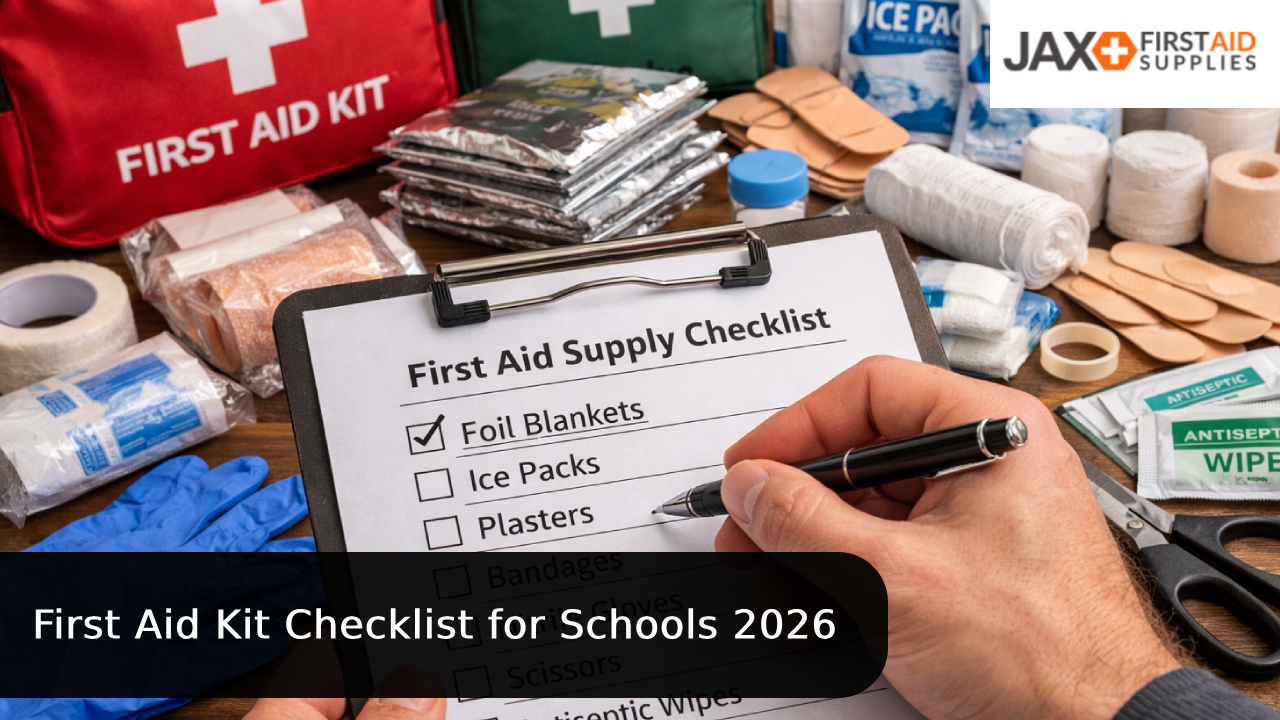
Every school’s first aid kit should contain sufficient first aid supplies for both pupils and staff. Below is a full UK compliant checklist for 2026:
Wound Care Essentials
- Assorted sterile plasters: Waterproof plasters for playground scrapes.
- Sterile dressings: Medium & large HSE dressings.
- Triangular bandages: For slings and immobilising limbs.
- Conforming bandages: Elastic bandages for support.
- Adhesive tape: Hypoallergenic and easy to tear.
- Eye pads: Sterile eye dressings for eye related incidents.
Cleaning & Hygiene Supplies
- Antiseptic wipes: Sterile wipes used to clean wounds.
- Disposable gloves: Nitrile gloves to help prevent contamination.
- Hand sanitiser: Essential for infection control.
- Eye wash solution: 500ml eyewash bottles for potential chemical splashes.
- Clinical waste bags: For safe disposal of clinical waste items.
Emergency & Safety Equipment
- Resuscitation face shield: For safe CPR.
- Foil blanket: Foil blanket is essential for shock or exposure.
- Instant ice packs: Single use instant ice packs for sports injuries.
- Safety pins: To help secure bandages.
- Scissors and tweezers: For cutting dressings safely and removing splinters or debris from a wound.
Why are school accident books a useful addition?
Recording incidents, such as injuries, illness or accidents, is a legal requirement under RIDDOR (Reporting of Injuries, Diseases and Dangerous Occurrences Regulations 2013) and DfE guidance. Every school is required to keep a record of injuries and treatment administered.
Your school can keep compliant with our School Accident Book, made for educational settings with easy to use, GDPR compliant forms.
Our recommended Ready Made First Aid Kits for Schools
Save time and ensure compliance by using our professionally assembled school kits:

1. Paediatric / School First Aid Kit
Best for:
Schools, nurseries, childminders & homes
Highlights:
- HSE recognised paediatric school first aid kit
- High quality separate pieces in strong wall mountable box
- Contents treat common children’s injuries

2. Childcare / School First Aid Kit
Best for:
Early years, nursery, pre-school & primary
Highlights:
- Complies with HSE and approved for childcare settings
- Aura3 recycled smart carry case with wall bracket
- Comprehensive contents for treating scrapes, cuts & eye injuries
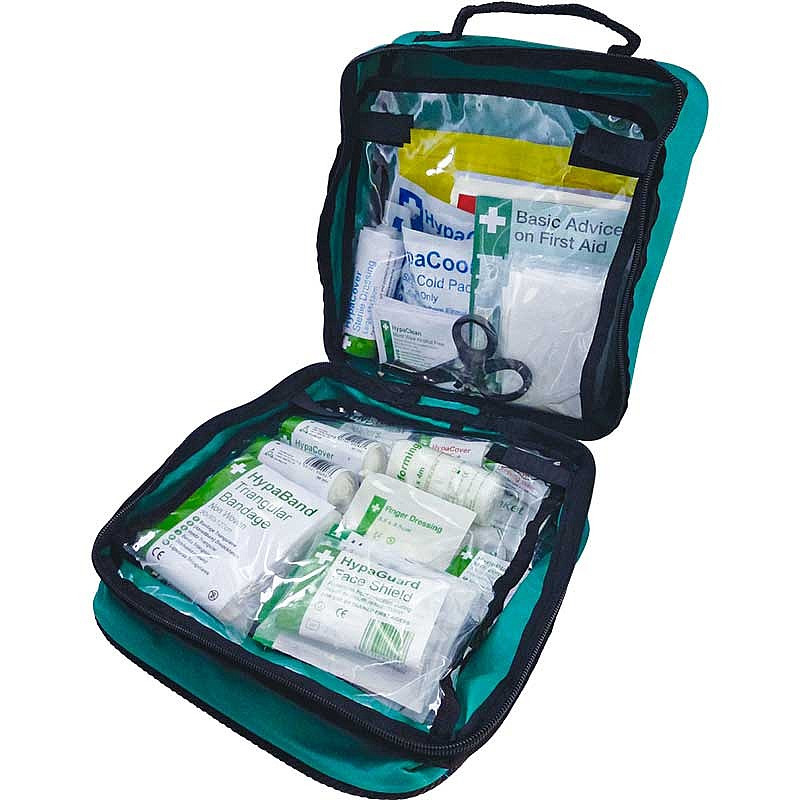
3. British Standard Compliant Secondary School Kit
Best for:
Secondary schools and older children
Highlights:
- British Standard compliant kit with extra care items
- Includes eyewash pods & cold packs for teenage injuries
- Soft or hard case options available

4. First Aid Cabinet Fully Stocked BS8599-1 Medium
Best for:
Schools and dedicated first aid rooms
Highlights:
- Wall mountable fully stocked first aid cabinet
- Contents based on BS8599-1 Medium with extras
- Secure metal cabinet with keys
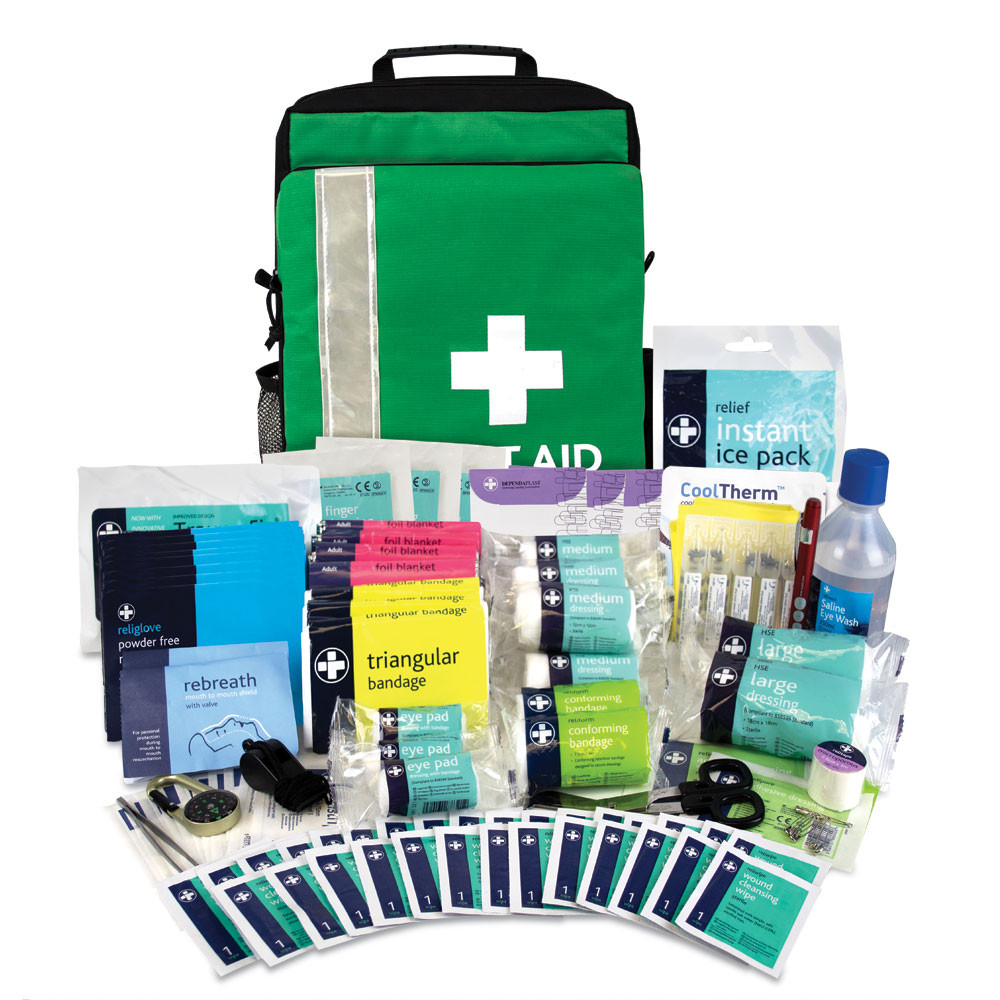
5. School Trip First Aid Kit
Best for:
School trips & outdoor activities
Highlights:
- Complies with and exceeds BS8599-1 medium
- Portable rucksack with compartment organisation
- 165+ piece kit for a wide range of incidents
How should I maintain and update my first aid supplies?
A school’s first aid provision is only effective if the following criteria is met:
Monthly Inspection Checklist
- It is very important to check expiry dates and replace used items.
- Refill used items after every incident.
- Keep spares in a First Aid Refill Kit.
Commonly Forgotten Items
Why should schools also have an AED (Defibrillator)?
Although not legally required, having an AED (defibrillator) on school premises is strongly recommended by the Resuscitation Council UK and DfE. It gives lifesaving capability during cardiac emergencies - for staff and pupils. Equip your school with the Mediana A15 HeartOn AED or the iPAD SP1 Defibrillator to protect staff, students, and visitors alike.