
Emergency Eye Wash Stations For UK Workplaces: A 2026 Buying Guide
Published by Jax First Aid Supplies on 13th May 2026
Emergency Shower & Eyewash Station Placement & Regulations
An eyewash station is a simple but important piece of workplace safety equipment. If dust, chemicals, grit, cleaning products, body fluids, powders or other substances could enter a worker’s eyes, the right eye wash provision can help support a faster first aid response.
For factories, workshops, warehouses, construction sites, laboratories, schools, catering areas, cleaning stores, maintenance teams and dusty work areas, choosing the correct eye wash station should be based on your workplace risk assessment. Some workplaces may only need sealed eyewash bottles, an eye wash pod kit or a wall-mounted eye wash pod station. Higher-risk areas may need a permanent emergency eyewash station, safety shower or emergency shower and eyewash station.
This guide explains where to put an eyewash station, which type of emergency equipment to buy, and when a workplace may need emergency eye wash, emergency eyewash, a safety shower or a combination shower and eyewash unit.
Quick Answer: What Eye Wash Does a Workplace Need?
A workplace should provide suitable eye wash or an eyewash station where a risk assessment identifies a risk of eye contamination or eye injuries. Low-risk areas may use sealed 500ml eye wash bottles with eye cap, 20ml eye wash pods or a wall-mounted eyewash unit. Higher-risk areas involving corrosive substances, hazardous chemicals or larger splash risks may need a plumbed-in eyewash station, a safety shower or an emergency shower.
Shop relevant supplies: eye wash supplies, eye wash pod stations, deluxe eye wash kits, first aid kits, PPE, gloves and eye wash signage.
What Is an Eyewash Station?
An eyewash station is a fixed, portable or wall-mounted point that provides fluid for flushing the eyes after exposure to a contaminant. Depending on the workplace, this may be a sealed bottle station, a gravity-fed unit, a portable unit or a plumbed-in eyewash station connected to a potable water supply.
The purpose of an emergency eye wash station is to allow quick eye irrigation after exposure to dust, debris, chemicals, powders, cleaning products or other potential hazards. Fast access matters because delays can increase the risk of discomfort, irritation or more serious eye damage.
An eyewash unit is usually used for the eyes and face, while a safety shower or emergency shower may be required where a worker’s eyes and body could be exposed to a larger chemical splash or corrosive chemical.
Eye Wash, Emergency Eyewash and Safety Shower: What Is the Difference?
Different workplaces need different types of wash equipment. A small office does not usually have the same hazard profile as a laboratory, factory mixing area or construction site using cement, dust or chemicals.
Eye Wash Bottles
Eyewash bottles are sealed bottles containing sterile saline solution or sterile flushing solution. They are useful for small first aid points, vans, workshops, schools, offices and areas where a portable eye wash option is suitable.
For general workplace use, a 500ml eye wash bottle with eye cap is a practical option for first aid points, site offices, workshops and mobile teams. Smaller 20ml eye wash pods are useful for compact kits and refills, while bulk users can stock 25-pack eye wash pods for regular replenishment.
They are easy to store, quick to use and useful where a fixed wash station is not practical. However, they provide a limited volume of fluid, so they may not be enough for higher-risk chemical areas.
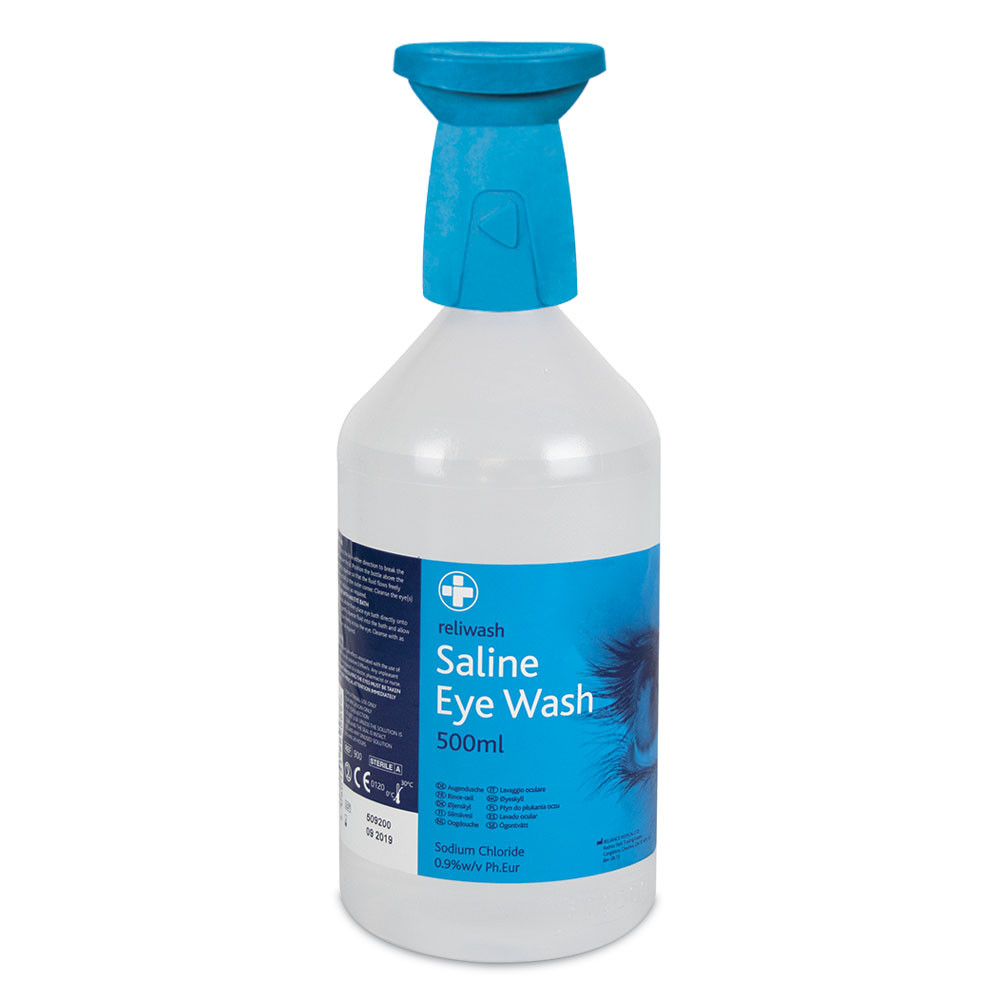
Product Pick: Eye Wash 500ml with Eye Cap
A simple, practical sterile saline eye wash bottle for workplaces that need a larger bottle available at first aid points, workshops, warehouses, vans or site offices.
Best use cases: construction sites, workshops, factories, warehouses, mobile engineers, maintenance teams and general first aid rooms.
Wall-Mounted Eyewash Station
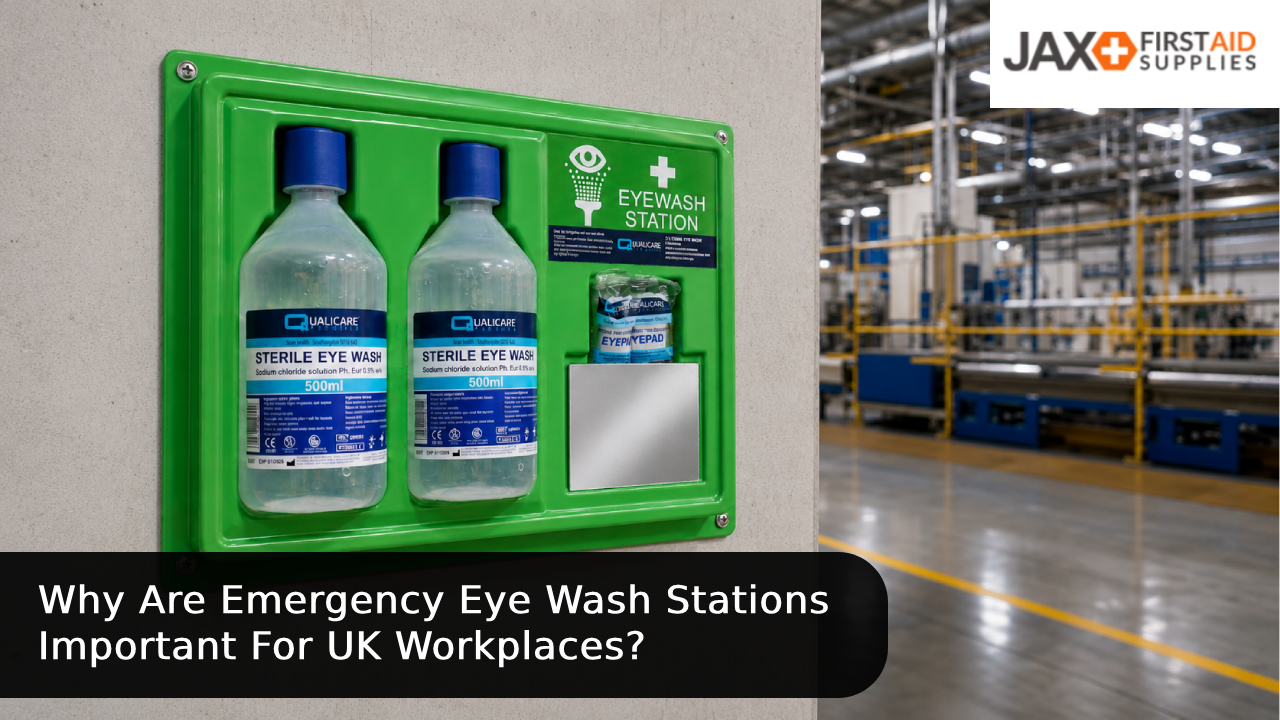
A wall-mounted eyewash station stores bottles, pods, dressings and instructions in one visible place. This is a good option for workplaces that need eye wash close to a specific work area, such as a workshop, warehouse, classroom, cleaning cupboard or maintenance area.
For lower-risk areas, a wall-mounted eye wash pod station can keep small eye wash pods organised and easy to find. For workplaces that need larger bottles, a double eye wash station panel with 500ml bottles and mirror, Premier Vision eye wash station or eye wash station case may be a better choice.
Jax First Aid also supplies the Eye Wash Kit Deluxe Double, Triple Eye Wash Kit and 1-10 Persons Eyewash First Aid Point for businesses that need clear, accessible first aid supplies for eye injuries.

Product Pick: Eye Wash Pod Station
A highly visible wall-mounted eyewash station supplied with 20ml eyewash pods, eye pad dressings, mirror and printed instructions.
Best use cases: schools, workshops, warehouses, cleaning stores, light manufacturing areas, offices with maintenance teams and first aid rooms.
Plumbed-In Eyewash Stations
Plumbed-in eyewash stations connect to a potable water supply and can provide a continuous flow of water. These are more suitable for higher-risk environments where a longer rinse may be required, especially around chemicals, laboratories, industrial processes or hazardous substances.
A permanent eyewash station may be selected where the hazard is fixed in one location and the workplace needs a reliable emergency eyewash response point nearby.
Safety Shower or Emergency Shower
A safety shower or emergency shower is designed for situations where contamination could affect the body, clothing or larger areas of skin. A shower station may be needed where workers handle corrosive materials, hazardous substances or chemicals that could splash onto the eyes and body.
Some high-risk workplaces use a combination shower and eyewash unit. This combines an emergency shower with an eyewash station so workers can rinse the eyes, face and body from one emergency response point.
Which Workplaces Need Emergency Eye Wash?
Any workplace where workers may get dust, debris, chemicals, bodily fluids or other contaminants in their eyes should consider suitable emergency eye wash provision. The exact equipment depends on the hazard, number of workers, work area, substances used and layout of the site.
Common workplaces that may need an eyewash station include:
- Factories and manufacturing sites
- Engineering workshops
- Construction sites
- Warehouses and logistics depots
- Laboratories and science departments
- Schools, colleges and universities
- Cleaning stores and facilities teams
- Catering and food production areas
- Vehicle workshops and garages
- Agricultural, outdoor and dusty sites
- Healthcare, care and body fluid risk areas
Best Eye Wash Options by Workplace
- Small offices, vans and mobile workers: eye wash pod kit, 20ml eye wash pods or eye bath.
- Workshops, schools and maintenance areas: eye wash pod station, eye wash station case or deluxe double eye wash kit.
- Factories, warehouses and construction sites: double eye wash station panel, Premier Vision eye wash station complete or triple eye wash kit.
- First aid rooms and stocked workplace points: 1-10 persons eyewash first aid point or fully stocked BS8599-1 medium first aid cabinet.
Workplace Buyer Tip
Do not buy one generic eye wash station for the whole business without checking where the actual hazards are. A workshop, cleaning store, laboratory, warehouse loading area and production line may all need different eye wash and first aid provision.
Where Should an Eyewash Station Be Located?
An eyewash station should be easy to find, quick to reach and close to the hazard it is intended to cover. In an emergency, workers should not have to search for the correct first aid equipment or travel through locked doors, stairways, cluttered routes or blocked walkways.
As a practical rule, many emergency eyewash and shower standards refer to access within around 10 seconds from the hazard. This is commonly associated with ANSI Z358.1 guidance and is also widely used as a benchmark by safety shower and eyewash suppliers. For UK workplaces, the key point is to place emergency equipment close enough for immediate use based on the risk assessment.
Good locations for a wash station include:
- Near chemical handling or mixing areas
- Near dust-producing machinery or cutting areas
- Near laboratories or science prep rooms
- Near workshops and maintenance benches
- Near cleaning chemical stores
- Near battery charging areas
- Near cement, plaster, powders or corrosive substances
- Near first aid rooms or main first aid points, where appropriate
The location of emergency equipment should be clearly signed. Use an Eye Wash Vinyl Sign to make your eyewash equipment easier to find.
Eye Wash Stations for Factories and Manufacturing Sites
Factories often need several eye wash points because different departments may have different hazards. A production line, maintenance workshop, chemical store, packing area and yard may all have separate risks.
Factories may need an eyewash station where workers could be exposed to:
- Dust, metal particles or flying debris
- Cleaning chemicals
- Oils, fluids or sprays
- Powders or dry ingredients
- Hot liquids or splashes
- Substances hazardous to health
Where the risk involves only small particles or low-level contamination, eyewash bottles or a wall-mounted eyewash unit may be suitable. Where there is a higher chemical splash risk, the site may need a plumbed-in eyewash station, safety shower or emergency shower.
Jax First Aid can support factories with eye wash supplies, PPE, safety gloves, workplace first aid kits, accident books and eye wash signs.
Eye Wash Stations for Construction Sites
Construction sites can create eye risks from dust, grit, cement, plaster, insulation, cutting, drilling, grinding, chemicals and outdoor conditions. Eye wash planning is especially relevant for construction and site work where dusty work areas, cement products and particles may be present.
Construction sites may need:
- Portable eyewash bottles for site first aid points
- Wall-mounted eye wash stations in welfare areas
- Eyewash supplies near dusty work areas
- Safety goggles and PPE to help reduce exposure
- Clear signage so workers can find first aid quickly
For mobile teams, vans and temporary projects, portable eye wash pod kits and 500ml eyewash bottles can be a practical starting point. For fixed higher-risk areas, a more permanent double eye wash station panel or deluxe double eye wash kit may be better.
Shop eye wash, trauma first aid kits, hi vis workwear, safety footwear and PPE.
Eye Wash for Workshops, Garages and Maintenance Teams
Workshops and garages often combine multiple eye hazards in one area. Workers may use hand tools, power tools, oils, sprays, aerosols, batteries, cleaning chemicals and abrasive materials.
A workshop eyewash station should usually be close to the main work area and easy to access even if someone has impaired vision after exposure. It should not be hidden behind stock, tools, doors or machinery.
Useful products include:
- Wall-mounted eye wash station case
- Sterile 500ml eyewash bottles with eye cap
- Eye wash pods for refilling kits and stations
- Eye bath
- Eye dressings
- Safety goggles or face protection
- Fully stocked BS8599-1 first aid cabinet
- Eye wash vinyl sign

Product Pick: Eye Wash Pod Kit
A compact, versatile eye wash pod kit suitable for general working environments and vehicle storage. A useful choice where a smaller portable first aid eye wash point is needed.
Best use cases: vans, mobile engineers, small workshops, offices, schools, reception areas, maintenance rooms and low-risk work areas.
Eye Wash for Laboratories and Science Areas
A laboratory or science department may need a higher level of emergency safety provision because workers or students may handle chemicals, glassware, powders, liquids and substances with safety data sheets.
In laboratory environments, the safety data sheets for substances used on site should help inform whether an emergency eyewash station, safety shower or combination shower and eyewash is required.
Laboratories may need:
- Emergency eyewash equipment close to benches or prep rooms
- Eye and face wash capability where splash risks exist
- Emergency safety showers where full-body contamination is possible
- Clear signage and an unobstructed route
- Training on the proper use of emergency equipment
For schools and education sites, browse school first aid supplies, eye wash supplies and PPE.
Eye Wash for Cleaning Stores, Catering and Facilities Teams
Cleaning, catering and facilities teams may use products that can irritate or damage the eyes. This is especially relevant where workers decant chemicals, use sprays, handle concentrated cleaning products or work in areas where splashes are possible.
For these areas, employers should check the product labels and safety data sheets, then decide whether emergency eye wash, PPE, gloves, aprons, face protection or a more substantial emergency shower is needed.
Useful products include:
- Eye wash station near cleaning stores
- Eyewash bottles for quick eye irrigation
- Disposable gloves and aprons
- Safety goggles where splash risks remain
- First aid kit nearby
- Body fluid kit where cleaning teams handle contamination risks
Shop cleaning and hygiene supplies, gloves, aprons, body fluid kits and eye wash supplies.
Emergency Eye Wash Station, Safety Shower or Both?
The choice between an emergency eye wash station, safety shower, emergency shower or combined unit depends on the type and severity of the hazard.
Eyewash Bottles
Best for low-risk areas, mobile teams, vans, first aid kits and minor contamination risks where portable eye irrigation is suitable.
Wall-Mounted Eyewash Station
Best for workshops, warehouses, schools, cleaning stores and areas that need a visible first aid eye wash point.
Plumbed-In Eyewash
Best for fixed higher-risk areas where continuous water flow may be needed for a longer rinsing time.
Emergency Shower
Best where the eyes and body may be exposed to corrosive or hazardous substances and full-body rinsing may be needed.
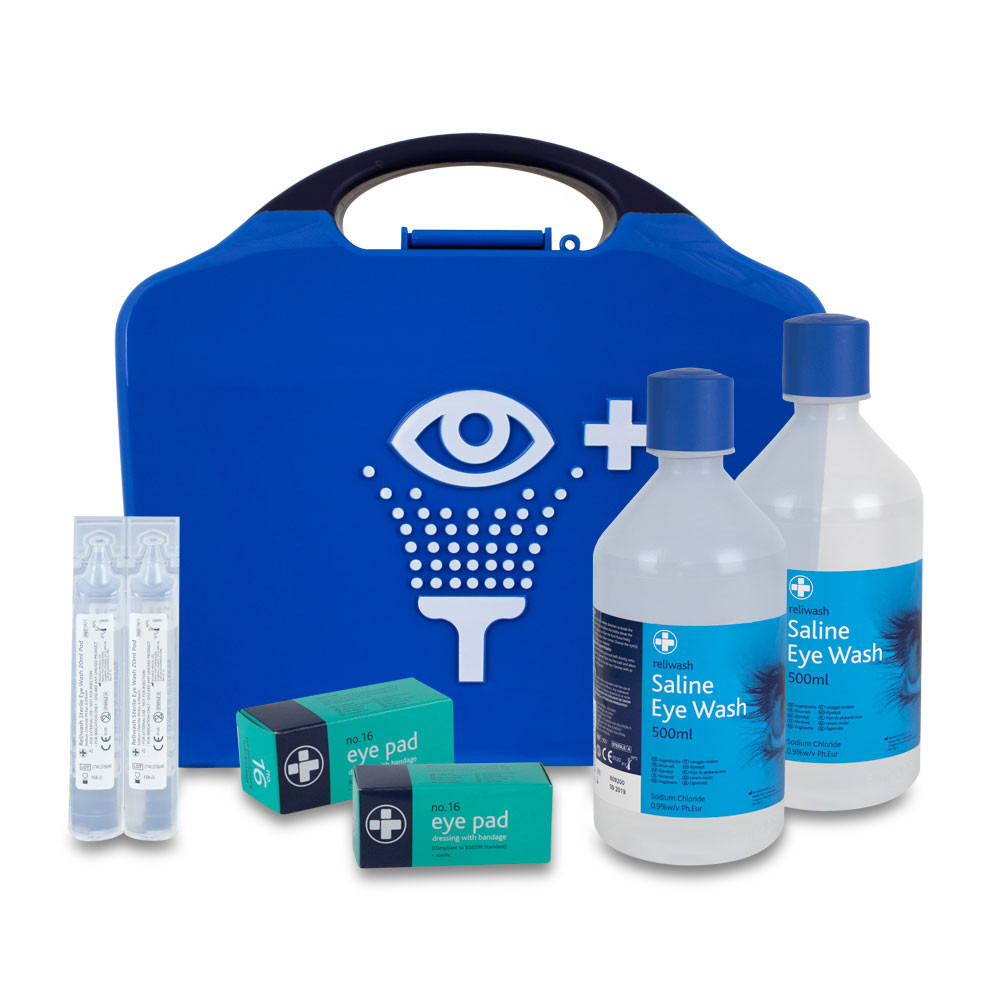
Product Pick: Eye Wash Kit Deluxe Double
A wall-mountable double eye wash kit with 500ml eye wash bottles, 20ml pods, eye pad dressings and mirror. A strong option for workplaces that need a more substantial visible eye wash point.
Best use cases: factories, workshops, laboratories, kitchens, warehouses, construction welfare areas and chemical handling points.
What About ANSI Z358.1 and National Standards?
ANSI stands for the American National Standards Institute. The ANSI standard often referenced for eyewash and shower equipment is ANSI Z358.1. This standard is widely discussed in relation to emergency eyewash and shower equipment, including areas such as location, activation, flow rate, water flow and performance.
However, ANSI Z358.1 is an American standard, not UK law. UK businesses should use their own risk assessment, relevant UK legal duties, HSE guidance, product instructions and applicable national standards when deciding what emergency eyewash and shower equipment is required.
In the UK and Europe, BS EN 15154 is commonly referenced for emergency safety showers and eyewash equipment. For example, BS EN 15154-2 covers plumbed-in eyewash units connected to the water supply. If your workplace has higher-risk chemical or laboratory hazards, check which standard applies to the type of equipment you are buying.
Important Compliance Note
Do not assume an ANSI reference automatically makes a product suitable for your UK workplace. The right emergency equipment depends on the hazard, the work environment, your risk assessment, relevant safety data sheets and the type of wash equipment required.
What Should You Check Before Installing an Eyewash Station?
Before installing an eyewash station, review the work area and decide what the equipment needs to protect against. The correct setup may depend on water temperature, flow rate, location, visibility, storage, maintenance and whether a potable water supply is available.
Ask these questions before buying:
- What contaminant could enter the eyes?
- Is the substance dusty, irritating, corrosive or hazardous?
- Could the substance affect the eyes and face only, or the eyes and body?
- Is a portable eyewash bottle enough, or is a permanent eyewash station needed?
- Is a safety shower or emergency shower needed?
- Can workers reach the station quickly in an emergency?
- Is the route free from obstructions?
- Is the location clearly signed?
- Who checks expiry dates, cleanliness and stock levels?
- Are workers trained in proper use?
Eyewash Station Maintenance and Stock Checks
An eyewash station is only useful if it is ready to use. Workplaces should check expiry dates on eyewash bottles, ensure the station is clean, replace opened or expired bottles and keep instructions visible.
For plumbed-in eyewash stations, the control valve, nozzles, water flow and general condition should be checked as part of the workplace maintenance process. Emergency safety showers may also need routine inspection and testing according to manufacturer instructions and site procedures.
Simple checks include:
- Are all bottles sealed and in date?
- Is the eyewash station clean and clearly visible?
- Is the route to the station clear?
- Is signage still in place?
- Have used bottles been replaced?
- Are workers aware of the station location?
- Is the equipment included in routine health and safety checks?
Eye Wash and First Aid Supplies to Order Together
Eye wash should usually sit alongside wider first aid supplies. If a workplace has eye hazards, it may also need PPE, safety goggles, gloves, first aid kits, signage and accident reporting products.
Recommended products to review include:
500ml Eye Wash Bottle
A practical bottle option for first aid points, workshops, site offices, warehouses and mobile teams.
Eye Wash Pod Kit
Compact eye wash kit option for small workplaces, vehicles, schools, offices and low-risk first aid points.
Eye Wash Pod Station
Wall-mounted station for keeping emergency eye wash pods visible and easy to access.
Eye Wash Station Case
Useful for workplaces that need eye wash supplies stored in a clear, protected and accessible case.
Deluxe Double Eye Wash Kit
A strong choice for workshops, factories, warehouses and first aid points that need more than one bottle available.
Double Eye Wash Station Panel
Wall-mounted 500ml eye wash station panel with mirror for visible workplace emergency eye wash access.
Premier Vision Eye Wash Station
Complete eye wash station option for businesses that need a clear, dedicated eye wash point.
Triple Eye Wash Kit
Useful for workplaces that want multiple eye wash bottles available from one first aid point.
1-10 Persons Eyewash First Aid Point
A combined first aid and eye wash point for smaller teams, offices, workshops and workplace areas.
Eye Wash Vinyl Sign
Helps workers and visitors quickly identify the location of emergency eye wash supplies.
Eye Wash Pods
Useful for refilling eye wash kits, stations and compact workplace first aid points.
Fully Stocked First Aid Cabinet
Ideal for workplaces that want first aid supplies stored properly alongside eye wash and emergency equipment.
Common Eye Wash Buying Mistakes
The biggest mistake is buying an eyewash station without checking the hazard first. A small bottle station may be suitable for one work area, but not enough for another area where a corrosive chemical, high splash risk or body contamination risk exists.
Common mistakes include:
- Putting the eyewash station too far from the hazard
- Blocking access with stock, tools or equipment
- Forgetting to replace used or expired eyewash bottles
- Not checking whether a safety shower is needed
- Assuming one station covers a whole site
- Not checking safety data sheets for chemical products
- Not providing PPE such as safety goggles where required
- Failing to signpost the location of emergency eye wash
Emergency Eye Wash Buying Checklist
Before You Buy, Check:
- Which work areas have eye contamination risks?
- What substances, particles or liquids could enter the eyes?
- Do safety data sheets recommend emergency eyewash or a safety shower?
- How many workers use the area?
- Can the eyewash station be reached quickly?
- Is the route clear and on the same level where possible?
- Is a bottle station, plumbed-in eyewash station or emergency shower more suitable?
- Does the workplace need signs, PPE, gloves or first aid kits too?
- Who checks expiry dates, cleanliness and stock levels?
- Are workers trained in proper use and emergency response?
Final Thoughts: Choose Eye Wash Based on Risk, Not Guesswork
The best eyewash station for your workplace depends on the hazard, the work environment and the likely emergency response needed. For some sites, sealed eyewash bottles and a visible wall-mounted station may be enough. For others, especially where corrosive chemicals or larger splash risks exist, a safety shower, emergency shower or combination shower and eyewash may be required.
Jax First Aid supplies eye wash, first aid kits, PPE, gloves, signage and workplace safety equipment for UK businesses, schools, construction teams, workshops, factories, warehouses, cleaning teams and facilities departments.
Need Eye Wash Supplies for Your Workplace?
Shop eyewash bottles, eye wash stations, eye wash pod kits, first aid points, PPE, gloves and safety signage from Jax First Aid.
Shop Eye Wash Shop Eye Wash Stations Shop Eye Wash Kits Ask About Bulk Orders
Frequently Asked Questions
What is an eyewash station?
An eyewash station is a fixed, portable or wall-mounted point that provides fluid for rinsing the eyes after exposure to dust, chemicals, debris or another contaminant. It can include eyewash bottles, a portable eyewash unit or a plumbed-in eyewash station.
Do UK workplaces need an eye wash station?
UK workplaces should provide suitable eye wash or an eyewash station where a risk assessment identifies a risk of eye contamination or eye injuries. The correct equipment depends on the hazard, work area, number of workers and substances used.
Where should an emergency eye wash station be located?
An emergency eye wash station should be close to the hazard, easy to find, clearly signed and accessible without obstruction. Many standards and safety suppliers refer to access within around 10 seconds as a practical benchmark.
What is the difference between eyewash bottles and a plumbed-in eyewash station?
Eyewash bottles provide a portable, limited amount of sterile saline solution or flushing solution. A plumbed-in eyewash station connects to a water supply and can provide a continuous flow of water for longer rinsing where required.
When is a safety shower needed?
A safety shower or emergency shower may be needed where a worker’s body or clothing could be exposed to a hazardous or corrosive substance. This should be decided through the workplace risk assessment and relevant safety data sheets.
Is ANSI Z358.1 UK law?
No. ANSI Z358.1 is an American National Standards Institute standard. It is often referenced internationally for emergency eyewash and shower equipment, but UK workplaces should also consider UK duties, HSE guidance, risk assessments, product instructions and relevant national standards.
What should be stored with an eyewash station?
Depending on the workplace, an eyewash station may be supported by sterile eyewash bottles, eye dressings, first aid kits, safety goggles, gloves, signs, accident books and PPE.
How often should eyewash bottles be checked?
Eyewash bottles should be checked regularly to make sure they are sealed, clean, in date and ready to use. Any opened, expired or missing bottles should be replaced.
Can Jax First Aid supply eye wash stations in bulk?
Yes. Jax First Aid supplies eye wash stations, eyewash bottles, first aid kits, PPE, gloves and safety signage for UK workplaces, schools, construction sites, factories, workshops, warehouses and facilities teams.