

Heatwave First Aid Checklist for UK Workplaces
Published by Jax First Aid Supplies on 1st Jul 2026
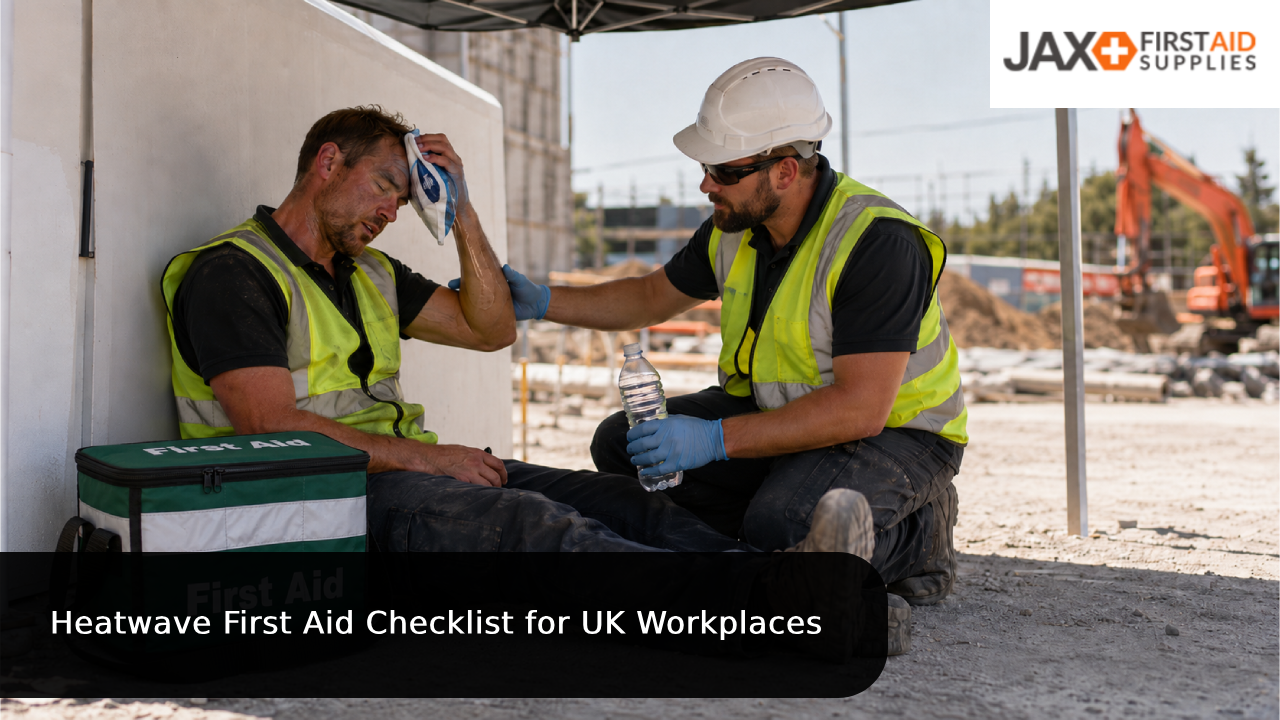
First Aid for UK Workplaces During Heatwaves
When temperatures rise across the UK, workplace first aid should not be treated as business as usual. Hot weather can increase the risk of dehydration, heat exhaustion, heatstroke, fainting, burns, slips, fatigue and avoidable incidents, especially in outdoor work, warehouses, kitchens, factories, schools, sports settings, care environments and busy public-facing workplaces.
This heatwave first aid checklist is designed to help UK employers, appointed persons, first aiders and health and safety leads review their first aid supplies, first aid kit contents, workplace procedures and staff awareness before and during periods of extreme heat.
Under UK law, employers must provide adequate and appropriate first aid equipment, facilities and personnel so employees can receive immediate attention if they are injured or taken ill at work. In hot conditions, that means your first aid needs assessment and wider risk assessment should consider heat stress, dehydration, heat exhaustion, PPE, outdoor work, vulnerable workers and any additional items your specific workplace may need. If you're reviewing provision from scratch, our workplace first aid supplies checklist for 2026 is a useful companion to this guide.
Quick Answer: What Should Workplaces Check During a Heatwave?
During a heatwave, every workplace should review its first aid arrangements, check the first aid kit is fully stocked, make sure first aiders know the signs of heat exhaustion and heatstroke, and consider whether additional first aid supplies are needed for the risks in your workplace.
A practical hot weather checklist should include a suitably stocked workplace first aid kit, instant ice packs, burn dressings where relevant, eye wash where needed, disposable gloves, accident reporting supplies, first aid kit inspection tags, clear staff information, access to cool drinking water, rest breaks and procedures for calling emergency services if someone becomes seriously ill at work.
Why Hot Weather First Aid Matters in the Workplace
Hot weather can turn ordinary workplace tasks into higher-risk activities. A short job outdoors, a busy shift in a warehouse, a long day in a kitchen, a physically demanding construction task or a school sports day can all become more challenging when high temperatures are involved.
Heat stress occurs when the body cannot cool itself effectively. If it is not managed, it can contribute to heat exhaustion and, in more serious cases, heatstroke. Workers may also become tired, dizzy, distracted or slower to react, which can increase the likelihood of accidents.
This is why workplace first aid should sit alongside wider heatwave planning. First aiders need to know what symptoms to look out for, staff need to know when to raise concerns, and employers should consider whether their first aid provision remains adequate during periods of extreme heat.
UK Law, HSE Guidance and Workplace Heat
The Health and Safety Executive explains that employers must assess risks to workers, including risks from extreme weather such as heatwaves. There is no fixed legal maximum workplace temperature, but heat is still a hazard that employers should manage as part of normal health and safety responsibilities.
The Health and Safety (First-Aid) Regulations 1981 require employers to provide adequate and appropriate first aid equipment, facilities and personnel. That does not mean every workplace needs the same first aid box. It means the first aid arrangements should be based on the risks in your workplace, the number of employees, work patterns, site layout and the nature of the work being carried out. For a fuller breakdown of what the regulations expect a kit to contain, see our guide on HSE-approved workplace first aid kit contents.
In hot weather, UK employers should consider whether their first aid needs assessment still reflects the real conditions on site. A low-risk office may need fewer additional items than a construction site, warehouse, commercial kitchen, school, sports venue or outdoor event, but every workplace should be prepared for someone becoming ill at work during a heatwave.
Heat Exhaustion and Heatstroke: What First Aiders Should Recognise
First aiders should be aware of the difference between heat exhaustion and heatstroke. Heat exhaustion occurs when the body gets too hot and loses water or salts, often through sweating. It can usually improve if the person is moved somewhere cooler, rested, cooled down and given fluids if they are alert and able to drink.
Common signs of heat exhaustion may include:
- Tiredness or weakness
- Dizziness or feeling faint
- Headache
- Heavy sweating
- Cool, pale or clammy skin
- Feeling sick or vomiting
- Muscle cramps
- Fast breathing or a fast pulse
- Feeling very thirsty
Heatstroke is a medical emergency. It can happen if heat exhaustion is not treated or if the body becomes unable to control its temperature. Signs of heat stroke can include confusion, collapse, a very high temperature, a seizure, loss of consciousness or symptoms that do not improve after cooling measures. If heatstroke is suspected, call emergency services immediately.
First Aid Reminder
If a worker is unwell in hot weather, move them to a cooler place, loosen unnecessary clothing, cool them with water or cool packs where appropriate, encourage them to drink if they are fully alert, and seek urgent medical help if symptoms are severe or do not improve.
Heatwave First Aid Checklist for UK Workplaces
Use this checklist before and during hot weather to review your first aid kit, first aid supplies and workplace response arrangements.
Hot Weather First Aid Checklist
- Review your first aid needs assessment for heatwave risks.
- Check your workplace first aid kit is complete, clean and accessible.
- Make sure the first aid box is clearly marked and easy to find.
- Restock used or expired first aid supplies.
- Check sterile dressings, plasters, gloves and wipes are in date.
- Add instant ice packs where suitable for your workplace risks.
- Review burn dressings and gels for kitchens, catering, workshops and outdoor work.
- Check eye wash provision for dusty, outdoor or chemical-risk environments.
- Make sure first aiders understand heat exhaustion and heatstroke symptoms.
- Tell workers how to report signs of heat illness early.
- Review PPE and clothing in hot conditions.
- Encourage workers to drink water regularly.
- Plan rest breaks in cooler or shaded areas.
- Schedule harder tasks for cooler parts of the day where possible.
- Identify workers who may be more vulnerable to heat.
- Make sure emergency first aid procedures are clear.
- Use inspection tags to track kit checks during summer.
Check Your Workplace First Aid Kit Before a Heatwave
A workplace first aid kit should always be suitable for the risks in your workplace, but heatwaves are a good reminder to check whether the kit is ready for increased summer incidents. Do not wait until a worker is ill or injured to find out the first aid box is missing gloves, dressings or basic supplies. Where a kit has been raided over a busy summer, a HSE 1-10 person refill pack is often a faster and cheaper fix than replacing the whole box.
Your first aid kit at work may include:
- Sterile dressings
- Plasters
- Bandages
- Disposable gloves
- Cleansing wipes
- Eye pads
- Foil blankets
- Scissors
- First aid guidance leaflet
- Accident reporting supplies
Depending on your specific workplace, you may need additional items such as eye wash, burn dressings, instant ice packs, cold packs, blister plasters, sports supplies, extra gloves or larger quantities of consumables.
Browse Jax First Aid's full range of workplace first aid kits for offices, warehouses, factories, schools, construction sites, public venues and general business use — from a compact HSE 1-10 person kit for smaller teams up to the larger HSE 1-20 person kit for busier sites.
Product Pick: First Aid Kit HSE 1-10 Person Workplace
First Aid Kit HSE 1-10 Person Workplace
A practical first aid kit for small workplaces that need essential items available for day-to-day injuries and illness at work.
Best use cases: small offices, retail spaces, workshops, small warehouses, reception areas, site offices and general workplace first aid points.
Instant Ice Packs and Cooling Supplies
Instant ice packs can be useful first aid supplies for workplaces where minor strains, sprains, knocks, swelling or sports injuries are more likely. A single-use instant relief ice pack activates the moment it is squeezed, giving cold therapy without needing a freezer on site, while a reusable hot and cold relief pack can be frozen or heated depending on the injury. During hot weather, cooling supplies may also be helpful as part of a wider first aid and welfare setup, provided they are used correctly and not placed directly against skin for prolonged periods.
They are especially useful for:
- Schools and sports days
- Gyms and leisure centres
- Warehouses and manual handling areas
- Construction sites
- Events and outdoor venues
- First aid rooms
- Mobile first aid bags
Browse the full range of instant and reusable ice packs for compact and large cold pack options.
Product Pick: Instant Ice Pack Large
Instant Ice Pack Large
A single-use instant cold pack for immediate cold therapy on minor injuries, swelling, sprains and strains.
Best use cases: sports clubs, schools, warehouses, construction sites, gyms, outdoor events and summer first aid restocking.
Burns, Sun Exposure and Hot Workplaces
Heatwave first aid is not only about heat exhaustion. In hot weather, some workplaces may also see more burn, scald, friction or contact injuries. This is particularly relevant for kitchens, catering, food production, manufacturing, workshops, outdoor work and jobs involving hot surfaces or equipment.
Burn dressings and burn gels may be relevant where your risk assessment identifies burn hazards. First aiders should still follow correct burn first aid procedures, including cooling the burn with cool running water where possible before dressing it.
Jax First Aid stocks a full range of burn dressings, gels and burns kits for workplaces where burns are a foreseeable risk, and a grab-and-go burns kit is a sensible addition for any kitchen or hot-work environment.
Eye Wash for Dusty, Outdoor and High-Risk Areas
During dry, hot weather, dusty environments can become more challenging. Outdoor work, construction sites, landscaping, warehouses, manufacturing and workshops may need to review eye wash provision as part of workplace first aid and wider PPE arrangements.
Eye wash may be required where mains tap water is not readily available or where the first aid needs assessment identifies a risk of dust, debris or chemical exposure. Eye wash should be easy to find, in date and stored where it can be reached quickly.
Browse eye wash bottles and pods, or, for a fixed point in a high-traffic area, a wall-mounted eye wash station.
PPE, Clothing and Personal Protective Equipment in Hot Weather
PPE can increase heat stress if it traps heat, limits airflow or makes it harder for the body to cool itself. Employers should not simply remove required PPE if it is needed for protection, but they should review whether clothing and personal protective equipment are suitable for hot conditions.
Employers should consider:
- Whether PPE is still suitable for the task and temperature
- Whether lighter or more breathable options are available
- Whether workers can remove PPE safely during rest breaks
- Whether rest areas are shaded or cooler
- Whether workers understand signs of heat stress
- Whether tasks can be moved to cooler parts of the day
For workplaces using hi vis, gloves, protective eyewear, aprons or other PPE and workwear, hot weather should be included in the risk assessment. Lighter, breathable hi-vis clothing can help in warm conditions, but the aim is always to protect workers from the original hazard without creating avoidable heat stress.
First Aid Training and Heatwave Awareness
A first aid kit is only part of the solution. First aiders and appointed persons should know how to respond if someone becomes ill during hot weather. Emergency first aid at work and first aid at work course training can support general first aid response, but employers may also need to provide information for employees on heatwave-specific risks.
Useful heatwave awareness topics include:
- How to spot signs of heat exhaustion
- When heatstroke may be suspected
- When to call emergency services
- How to move someone to a cooler place
- How to cool someone safely
- Why workers should report symptoms early
- How PPE can affect heat stress
- Where the first aid box is kept
- Who the appointed person or first aider is
First aid training courses and refresher sessions can help staff respond confidently, but hot weather information should also be simple, visible and repeated during heatwaves. Clear first aid signage showing where the kit and first aider can be found supports a faster response when someone falls ill.
Workplaces That May Need Additional Heatwave Planning
Every workplace should consider hot weather, but some organisations may need additional planning due to the work activity, environment or people on site.
Construction Sites and Outdoor Workers
Outdoor workers may be exposed to direct sun, high temperatures, physical exertion and PPE. Employers should consider shade, rest breaks, cool drinking water, sunscreen policies, task rotation, earlier starts and easy access to appropriate first aid equipment. A portable option such as a construction site first aid kit that can move around the site is often more practical than a single fixed box.
Warehouses and Factories
Warehouses and factories may become hot due to poor airflow, machinery, loading bays, physical work and large indoor spaces. First aiders should be aware of heat exhaustion symptoms, and first aid kits should be accessible across the site.
Kitchens, Catering and Food Production
Kitchens and catering environments can become very hot even without a heatwave. Burn supplies, hydration planning, rest breaks and staff awareness are particularly important, and a dedicated catering first aid kit with blue detectable plasters and burn dressings is well suited to food settings.
Schools, Sports Clubs and Events
Sports days, outdoor events, school activities and summer fixtures can increase demand for first aid supplies such as ice packs, plasters, gloves, dressings and eye wash. A grab-and-go sports first aid kit is handy for pitchside cover, and first aiders should also consider children, older visitors and people with health conditions who may be more vulnerable to heat.
Care, Community and Public-Facing Settings
Care settings, community venues, visitor attractions and public-facing workplaces may need to support staff, visitors and vulnerable people during heatwaves. Clear first aid arrangements and escalation procedures are important.
Who Is More Vulnerable to Heat?
Some workers and visitors may be more vulnerable to heat. Employers should consider this as part of heat health planning and workplace safety arrangements.
Higher-risk groups may include:
- Older workers
- Pregnant workers
- Workers with certain health conditions
- People taking certain medications
- New workers who are not acclimatised
- Young or inexperienced workers
- People doing strenuous work
- People wearing heavy PPE
- Workers fasting or unable to drink regularly
- People working alone or remotely
Support is available through better planning, clear communication, first aid awareness and practical controls such as cool rest areas, water access and task scheduling.
First Aid Kit Inspection During Summer
A first aid kit at work should be checked regularly, but summer is a good time to add extra inspection points. Heat, humidity, outdoor storage and increased use can all affect first aid supplies. If you're unsure how frequently to check, our guide on how often first aid kits should be checked sets out what the HSE expects.
Check that:
- The first aid box is clean and easy to access
- The kit is not stored in direct heat or sunlight where avoidable
- Sterile items are sealed and in date
- Used items have been replaced
- Gloves are in good condition
- Eye wash is in date and unopened
- Burn dressings are sealed
- Instant ice packs are present where needed
- The first aid guidance leaflet is present
- The inspection record is up to date
A first aid kit inspection tag can help appointed persons and first aiders record routine checks, and pairing it with a general inspection tag keeps checks on eye wash stations, cabinets and other equipment under control too.
Recommended Heatwave First Aid Supplies From Jax First Aid
Jax First Aid supplies first aid kits, ice packs, burn care, eye wash, PPE, inspection tags and workplace first aid supplies for UK employers preparing for hot weather and heatwaves.
Workplace First Aid Kits
Choose suitable kits for offices, factories, warehouses, schools, shops, sites and public-facing workplaces.
Ice Packs
Instant cold packs for first aid kits, sports clubs, schools, events and hot weather restocking.
Burns Supplies
Burn dressings, burn gels and burns kits for kitchens, catering, workshops and hot work environments.
Eye Wash
Eye wash bottles, pods, stations and kits for dusty, outdoor, workshop and chemical-risk areas.
Final Thoughts: Prepare Before the Next Heatwave
A heatwave can put pressure on people, workplaces and first aid arrangements. The best approach is to prepare before temperatures rise, rather than reacting after someone becomes ill.
Review your first aid needs assessment, update your risk assessment for hot weather, check your workplace first aid kit, brief first aiders, restock essential items and make sure workers know how to report early signs of heat stress.
Jax First Aid supplies workplace first aid kits, ice packs, burn care, eye wash, PPE and workplace first aid supplies for UK businesses, schools, sports clubs, venues, warehouses, kitchens and outdoor work settings.
Need to Restock for Hot Weather?
Shop first aid kits, ice packs, burn dressings, eye wash, inspection tags and workplace first aid supplies from Jax First Aid.
Shop Workplace Kits Shop Ice Packs Shop Burns Supplies Ask About Bulk Orders
Frequently Asked Questions
What should be in a workplace first aid kit during a heatwave?
A workplace first aid kit should contain the normal items identified by your first aid needs assessment, such as dressings, plasters, gloves, wipes, bandages and guidance. During a heatwave, some workplaces may also need additional first aid supplies such as instant ice packs, eye wash or burns dressings depending on the risks.
Is there a legal maximum workplace temperature in the UK?
There is no fixed legal maximum workplace temperature in the UK. Employers must still manage health and safety risks, including heat and extreme weather, and provide a reasonable workplace temperature where required by workplace conditions.
What are the signs of heat exhaustion at work?
Signs of heat exhaustion can include tiredness, dizziness, headache, heavy sweating, pale or clammy skin, nausea, cramps, thirst, fast breathing or a fast pulse. First aiders should move the person somewhere cooler and seek medical help if symptoms are severe or do not improve.
When should heatstroke be treated as an emergency?
Heatstroke should be treated as a medical emergency if someone is confused, collapses, has a seizure, loses consciousness, has a very high temperature, or does not improve after cooling measures. Call emergency services immediately if heatstroke is suspected.
Do employers need to review PPE during hot weather?
Yes. PPE may increase heat stress if it traps heat or limits cooling. Employers should review clothing and personal protective equipment during hot weather while still making sure workers remain protected from the hazards the PPE is designed for.
Should first aiders receive heatwave first aid information?
Yes. First aiders should understand signs of heat exhaustion, heatstroke, dehydration and when to call emergency services. Employers should also provide information for employees so workers can report symptoms early.
Are instant ice packs useful for workplace first aid?
Instant ice packs can be useful for many workplace first aid kits, especially in schools, sports clubs, warehouses, events and manual handling areas. They are mainly used for minor sprains, strains, swelling and knocks, and should be used according to instructions.
Can Jax First Aid supply heatwave first aid supplies in bulk?
Yes. Jax First Aid supplies workplace first aid kits, ice packs, burn dressings, eye wash, PPE, inspection tags and other first aid supplies for UK workplaces preparing for hot weather and heatwaves.