
What PPE Must Employers Provide in the UK?
Published by Jax First Aid Supplies on 6th May 2026
The Ultimate Guide to PPE for Workplaces
Understanding PPE is essential for any UK business that needs to protect workers, visitors, contractors or temporary staff. PPE, or personal protective equipment, is used to reduce exposure to workplace hazards when risks cannot be removed or controlled in a safer way.
Under UK law, an employer has duties regarding personal protective equipment at work. Where PPE is required, the employer must provide suitable PPE free of charge and make sure workers know how to use it correctly.
This guide explains what PPE employers must provide, when PPE is required, which UK workplaces usually buy the most PPE, and how to choose the right PPE supplier for factories, construction sites, warehouses, logistics teams, schools, catering businesses, cleaning companies and facilities teams.
Quick Answer: What PPE Must Employers Provide?
An employer must provide PPE when workers may be exposed to a risk to their health or safety and that risk cannot be adequately controlled by other means. PPE must be suitable for the task, the work environment and the wearer. Where PPE is required by law, it must be provided free of charge.
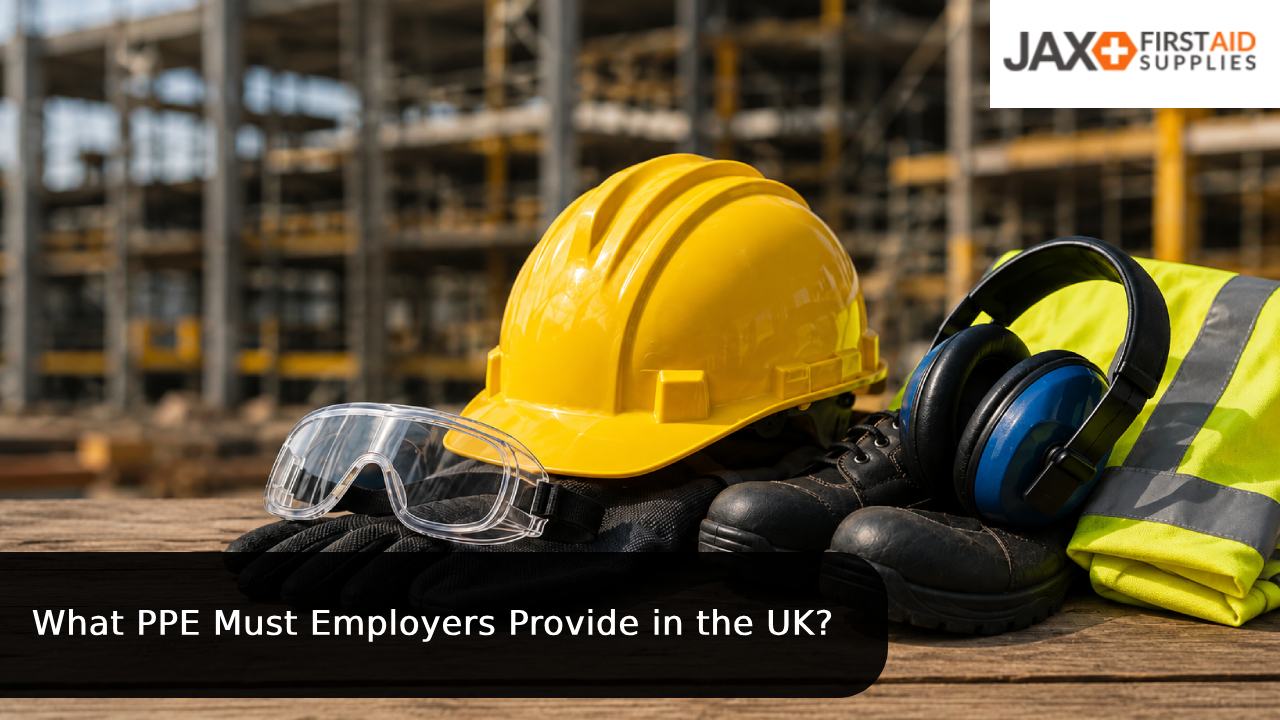
Common PPE includes safety gloves, safety footwear, safety boots, safety helmets, safety goggles, hi vis clothing, respiratory protection, hearing protection, protective clothing, aprons and disposable PPE.
Shop workplace supplies: PPE, gloves, hi vis workwear, safety footwear, workwear and eye wash supplies.
Understanding PPE and Personal Protective Equipment at Work
PPE stands for personal protective equipment. It includes equipment, clothing and accessories designed to protect someone against health and safety risks while at work.
Personal protective equipment may protect the head, eyes, face, hearing, lungs, hands, feet, body or skin. The correct type of PPE depends on the workplace risk, the work activities being carried out and the hazards workers may face.
Examples of PPE include:
- Safety helmets and bump caps
- Safety goggles, face shields and eye protection
- Safety gloves and disposable gloves
- Safety footwear and safety boots
- Hi vis vests, jackets and trousers
- Respiratory protective equipment
- Hearing protection
- Protective clothing, aprons and disposable clothing
- Fall protection equipment where required
PPE is not a replacement for good health and safety management. It should usually be used after the employer has considered whether the risk can be eliminated, reduced or controlled by other means.
PPE Regulations UK: What Does UK Law Say?
The main PPE regulations are the Personal Protective Equipment at Work Regulations 1992, as amended by the Personal Protective Equipment at Work Amendment Regulations 2022. These are often referred to as the protective equipment at work regulations.
The regulations require employers to provide suitable PPE where risks cannot be adequately controlled by other means. In simple terms, if a worker may be exposed to a risk to their health or safety while at work, and that risk has not been adequately controlled by other means which are equally or more effective, suitable personal protective equipment must be provided.
The Health and Safety at Work etc Act 1974 also places wider duties on employers and the self-employed to protect health, safety and welfare at work. PPE is one part of that broader health and safety at work responsibility.
UK PPE Law in Plain English
If a risk cannot be removed or adequately controlled by other means, the employer must provide appropriate PPE. The PPE you provide must be suitable, properly maintained, correctly stored and worn when required.
- PPE must be suitable for the hazard.
- PPE must fit the worker properly.
- PPE must be compatible with other items of PPE.
- PPE must be provided free of charge where required for work.
- Workers must receive information, instruction and training on correct use of PPE.
What Changed on 6 April 2022?
On 6 April 2022, the Personal Protective Equipment at Work Amendment Regulations 2022 extended employers’ PPE duties. Before this change, the duties mainly applied to employees. Since 6 April 2022, the duties also apply to limb (b) workers.
This matters for businesses using casual workers, agency-style labour, temporary workers or workers who are not traditional employees but still fall within the legal definition of limb (b) workers.
In practical terms, employers must provide PPE free of charge to workers covered by the regulations where PPE is required for the job. Employers and employees also have duties to make sure PPE is used correctly, maintained and reported if lost or defective.
When Is PPE Required?
PPE is required when a risk assessment shows that a person may be exposed to a risk and that risk cannot be adequately controlled without personal protective equipment.
The employer should first consider whether the hazard can be removed, substituted, isolated, guarded, ventilated, controlled by safer working methods or reduced through other safety measures. PPE should then be used for remaining risks that cannot be adequately controlled by other means.
For example, PPE may be required where workers are exposed to:
- Flying particles, dust, splashes or chemicals
- Noise levels that could damage hearing
- Moving vehicles or low visibility areas
- Sharp edges, rough materials or hot surfaces
- Slippery floors, falling objects or impact risks
- Substances hazardous to health
- Outdoor weather, cold stores or high-risk site conditions
Employer Duties: How to Provide PPE Correctly
Employers have a legal duty to protect workers from health and safety risks. Where PPE is required, employers must ensure PPE is suitable and that workers understand when and how to use PPE.
An employer must:
- Carry out a risk assessment before selecting PPE.
- Provide suitable PPE where risks cannot be adequately controlled by other means.
- Provide PPE free of charge where it is required for work.
- Ensure PPE fits the worker and the work environment.
- Ensure PPE is compatible with other items of PPE.
- Train workers in the correct use of PPE.
- Store, maintain, clean and replace PPE properly.
- Make sure PPE is worn when required.
Employees must use the PPE provided in accordance with the training and instructions they receive. They should also report damaged, lost or defective PPE so that it can be replaced.
Which Type of PPE Do UK Workplaces Need?
There is no single PPE list for all UK workplaces. The right PPE depends on the work environment, the job role and the workplace risk assessment.
The most common type of PPE for UK workplaces includes head protection, eye protection, hand protection, foot protection, high visibility clothing, hearing protection, respiratory protection and protective clothing.
Head Protection: Safety Helmets and Bump Caps
Safety helmets may be required where there is a risk of falling objects, impact, low headroom or site hazards. Construction sites, maintenance teams, warehouses, utilities and engineering environments may need this type of PPE.
Eye Protection: Safety Goggles and Face Protection
Safety goggles and face shields may be needed where workers face risks from dust, flying particles, chemical splashes, bodily fluids, cleaning products or cutting and grinding tasks.
Hand Protection: Safety Gloves and Disposable Gloves
Safety gloves are one of the most frequently reordered PPE items. Different tasks may need different gloves, including disposable gloves, handling gloves, cut-resistant gloves, chemical-resistant gloves or thermal gloves.
Shop workplace gloves for factories, warehouses, cleaning teams, schools, catering businesses and first aid points.
Foot Protection: Safety Footwear and Safety Boots
Safety footwear and safety boots may be required where there are risks from impact, crushing, slipping, sharp objects, wet areas, uneven ground or manual handling. Construction, manufacturing, warehousing, logistics and facilities teams are common buyers.
Browse safety footwear for workplace teams.
High Visibility PPE
Hi vis PPE may be required where workers need to be seen clearly. This is common around moving vehicles, warehouses, loading bays, construction sites, car parks, roadways, yards and events.
Jax First Aid supplies hi vis workwear, personalised hi vis vests and hi vis zip vests.
Respiratory Protective Equipment
Respiratory PPE may be needed where dust, fumes, mist, vapour or other airborne hazards remain after other controls have been considered. This is particularly relevant for construction, maintenance, manufacturing, cleaning, laboratories and some food production tasks.
Protective Clothing and Disposable PPE
Protective clothing may include aprons, coveralls, disposable clothing, sleeve protectors or weatherproof clothing. These items help protect against contamination, dirt, chemicals, fluids, poor weather or task-specific hazards.
Shop aprons, workwear and PPE.
PPE for Factories and Manufacturing Workplaces
Factories and manufacturing sites are some of the largest PPE buyers because they often have machinery, production lines, tools, moving vehicles, sharp materials, noise, heat, dust and chemical risks.
Common PPE required for factories includes:
- Safety gloves for handling, assembly and packing
- Cut-resistant gloves for sharp materials
- Safety footwear or safety boots
- Safety goggles or face protection
- Hearing protection in noisy areas
- Respiratory protection where dust or fumes remain a risk
- Hi vis workwear for yards, forklift zones and loading areas
- Disposable PPE for hygiene or contamination control
Factories should also stock supporting safety equipment such as workplace first aid kits, eye wash stations, burns supplies, accident books and safety signage.
Factory PPE Buying Tip
Do not buy one glove for every department. A warehouse picker, machine operator, maintenance engineer and chemical handling worker may each need a different type of PPE.
PPE for Construction Sites
Construction sites need PPE because workers may be exposed to impact risks, falling objects, moving vehicles, dust, noise, vibration, sharp materials, weather, work at height and uneven surfaces.
Common PPE for construction includes:
- Safety helmets
- Hi vis vests, hi vis jackets and hi vis trousers
- Safety footwear or safety boots
- Protective gloves
- Safety goggles and face shields
- Hearing protection
- Respiratory protection for dust-producing work
- Weatherproof workwear
For construction teams, PPE and first aid supplies should usually be planned together. Browse PPE, hi vis workwear, safety footwear, gloves and first aid kits.
PPE for Warehouses, Logistics and Distribution Centres
Warehouses and logistics sites often use PPE across picking, packing, loading, vehicle yards, forklift zones, battery charging areas, cold stores and visitor areas.
Common PPE for warehouses includes:
- Hi vis vests and jackets
- Safety footwear
- Handling gloves
- Cold-store clothing where required
- Eye protection for maintenance or battery charging areas
- Visitor PPE for drivers, contractors and guests
Because warehouse teams often have high staff turnover and shift patterns, keeping spare PPE stock is important. Personalised hi vis can also help identify supervisors, first aiders, visitors and drivers.
Warehouse PPE Starter List
- Hi vis vests for staff and visitors
- Safety footwear for yard and loading work
- Handling gloves for pallets, cartons and packaging
- Eye wash where dust, debris or chemicals may be present
- First aid kits near loading bays, offices and picking areas
- PPE signs for mandatory protection zones
PPE for Catering, Food Production and Hospitality
Catering, hospitality and food production teams may need PPE for hygiene, cleaning, food handling, burn risks, wet floors, chemical use and contamination control.
Common PPE includes:
- Disposable gloves
- Aprons and disposable clothing
- Slip-resistant safety footwear
- Cleaning gloves
- Eye protection for chemical handling
- Face protection where splash risks remain
Businesses in this sector may also need catering first aid kits, blue detectable plasters, burns supplies, disposable gloves, aprons and cleaning and hygiene supplies.
PPE for Schools, Colleges and Education Sites
Schools and colleges may need PPE across classrooms, site teams, caretakers, cleaners, catering areas, science departments, design and technology rooms, playground duties and school trips.
Common PPE across education sites includes:
- Disposable gloves and aprons
- Eye protection for science or technology tasks
- Hi vis vests for trips, playground duties and car parks
- Cleaning gloves and spill response supplies
- Protective gloves for site teams and caretakers
Jax First Aid supplies school first aid supplies, body fluid kits, accident books, hi vis and PPE for education sites.
PPE for Cleaning, Facilities and Maintenance Teams
Cleaning, facilities and maintenance teams frequently need PPE because they may work with cleaning chemicals, waste, body fluids, tools, dust, plant rooms, car parks and public areas.
Common PPE for these teams includes:
- Disposable gloves
- Cleaning gloves
- Aprons and disposable clothing
- Eye protection for splash risks
- Safety footwear
- Hi vis workwear for car parks, outdoor areas and estates work
- Body fluid spill kits and cleaning supplies
For multi-site facilities teams, standardising PPE across all locations can make reordering easier and reduce confusion.
PPE for Events, Security and Public-Facing Teams
Event staff, security teams and public venue workers may need PPE for visibility, outdoor weather, crowd management, cleaning tasks, first aid support and car park duties.
Common PPE includes:
- Hi vis vests for staff, visitors, marshals and volunteers
- Weatherproof hi vis jackets
- Disposable gloves and aprons
- Body fluid spill kits
- First aid kits and emergency signage
Printed hi vis can help members of the public quickly identify first aiders, security staff, marshals and supervisors. View personalised hi vis vests and event first aid kits.
How to Choose a PPE Supplier for UK Workplaces
A good PPE supplier should offer more than a few basic products. For B2B buyers, the supplier should make it easy to order a practical range of PPE, first aid supplies, hi vis, workwear, signage, hygiene supplies and replacement stock in one place.
When choosing a PPE supplier, consider whether they can support:
- Bulk orders for teams and multiple locations
- A wide range of PPE for different departments
- Workwear and high visibility clothing
- Gloves, safety footwear, aprons and disposable PPE
- First aid kits, eye wash, signage and spill kits
- Clear product categories for fast reordering
- Support for schools, factories, warehouses, construction and events
Jax First Aid supplies PPE, workwear, first aid and workplace safety products to businesses across the UK. If your team needs compliant PPE, branded hi vis, workplace first aid kits or safety supplies, you can order online or contact the sales team for bulk support.
How to Make Sure PPE Is Compliant With UK Requirements
To make sure PPE is compliant with UK expectations, businesses should choose products suitable for the task and check relevant product information before purchase. PPE should be suitable for the hazard, compatible with other protective equipment and used in accordance with instructions.
Employers must ensure workers understand the correct use of PPE. They should also ensure PPE is stored, cleaned, maintained and replaced when needed.
Before buying PPE, ask:
- What risk is this PPE protecting against?
- Has the risk been adequately controlled by safer methods first?
- Is this the correct PPE for the task?
- Does it fit the worker?
- Can it be worn with other PPE properly?
- Does the worker know how to use PPE properly?
- How often should it be checked or replaced?
Common PPE Buying Mistakes Employers Should Avoid
Even when businesses know PPE is required, mistakes can happen. These mistakes can lead to wasted money, unsuitable stock or workers not being protected properly.
Common mistakes include:
- Buying PPE before completing a risk assessment
- Ordering one glove type for every job
- Not keeping spare PPE for visitors, agency workers or new starters
- Not checking if different items of PPE work together
- Buying hi vis without checking site requirements
- Not replacing worn, damaged or contaminated PPE
- Not training workers on correct use of PPE
- Not storing PPE properly
PPE Buying Checklist for Employers
Use this checklist before ordering PPE for your workplace.
1. Identify the Risk
Use your risk assessment to identify where workers may be exposed to a risk to their health or safety.
2. Check Other Controls
Only rely on PPE where risks cannot be adequately controlled by other means.
3. Choose Suitable PPE
Select appropriate PPE for the task, worker, hazard and work environment.
4. Plan Reordering
Keep enough PPE stock for replacements, visitors, seasonal work and new starters.
Best PPE and Safety Products to Order From Jax First Aid
Jax First Aid supplies a practical range of PPE, workwear, first aid and workplace safety products for UK businesses.
PPE
Shop personal protective equipment for workplaces, contractors, schools, facilities teams and site staff.
Gloves
Order disposable gloves, safety gloves and workplace gloves for handling, cleaning, first aid and hygiene tasks.
Hi Vis Workwear
Choose hi vis vests, jackets and high visibility workwear for construction, logistics, events and site teams.
Safety Footwear
Buy safety footwear and safety boots for teams working around impact, slips, sharp objects or site hazards.
Workwear
Build practical workwear packages for teams that need durable clothing, jackets, polos, hoodies and t-shirts.
Eye Wash
Support PPE with workplace eye wash stations, eyewash bottles and emergency eye care supplies.
Final Thoughts: Providing the Right PPE for Your Workplace
PPE is an important part of workplace safety, but it should be chosen carefully. The correct PPE depends on your risk assessment, work activities, work environment and the people who need protection.
For high-volume workplaces such as factories, construction sites, warehouses, logistics depots, schools, catering businesses, cleaning teams, facilities departments and events, PPE should be reviewed regularly and reordered before stock runs low.
If you need a UK PPE supplier for workplace PPE, first aid kits, hi vis, workwear, gloves, safety footwear, eye wash or safety equipment, Jax First Aid can help you build a practical supply list for your team.
Need PPE for a UK Workplace?
Jax First Aid supplies PPE, hi vis, workwear, gloves, safety footwear, first aid kits, eye wash, signage and hygiene supplies for UK businesses.
Order online or contact our team for help with bulk PPE supplies for factories, construction sites, warehouses, schools, catering teams, events and facilities departments.
Frequently Asked Questions
Do employers have to provide PPE in the UK?
Yes. Employers must provide suitable PPE where workers may be exposed to a health or safety risk at work and that risk cannot be adequately controlled by other means. Where PPE is required for work, it must be provided free of charge.
What PPE is legally required?
The PPE required depends on the workplace risk assessment. UK law does not provide one universal PPE list for every workplace. The employer must provide PPE that is suitable for the hazard, task, work environment and worker.
What are the main PPE regulations in the UK?
The main PPE regulations are the Personal Protective Equipment at Work Regulations 1992, as amended by the Personal Protective Equipment at Work Amendment Regulations 2022. These regulations set out duties regarding personal protective equipment at work.
What changed on 6 April 2022?
From 6 April 2022, the amended PPE regulations extended employers’ duties to limb (b) workers. This means suitable PPE must also be provided free of charge to workers covered by the amended regulations where PPE is required for their work.
Can an employer charge employees for PPE?
No. Where PPE is required for work, it should be provided free of charge. The employer should not charge workers for PPE that is required to protect them at work.
What PPE do construction workers need?
Construction workers may need safety helmets, hi vis clothing, safety footwear, gloves, safety goggles, hearing protection and respiratory protection. The correct PPE depends on site rules, work activities and the risk assessment.
What PPE do factory workers need?
Factory workers may need gloves, safety footwear, safety goggles, hearing protection, respiratory protection, hi vis workwear and protective clothing. The exact PPE required depends on machinery, substances, noise, materials and workplace risk.
Do employees have to wear PPE?
Yes. Where PPE is provided and workers are instructed to wear it, employees must use the PPE properly and follow the instruction and training provided. They should also report damaged or defective PPE.
How often should PPE be replaced?
PPE should be replaced when it is damaged, worn, contaminated, lost, no longer fits correctly or no longer provides suitable protection. Employers should inspect, maintain and replace PPE as required.
Can Jax First Aid supply PPE in bulk?
Yes. Jax First Aid supplies PPE, gloves, hi vis, workwear, safety footwear, eye wash, first aid kits, signage and hygiene products for UK businesses, schools, contractors, warehouses, construction sites, events and workplace teams.