

Why Mental Health First Aid (MHFA) Is Essential for UK Workplaces in 2026
Published by Jax First Aid Supplies on 7th Jan 2026
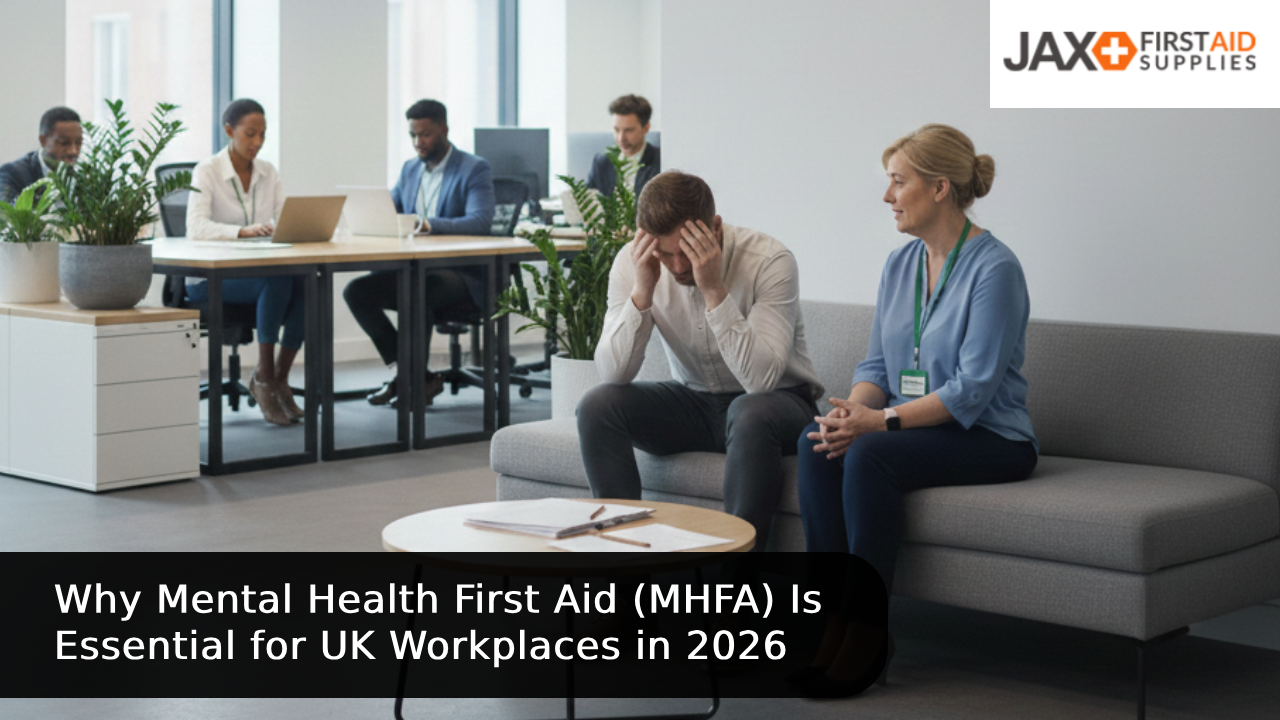
Why is MHFA so important for UK Workplaces in 2026?
In 2026, UK workplace health and safety is not just about slips, trips, and fire exits; it is about the mental wellbeing of individuals too. While traditional first aid has a focus on physical injuries or illness, modern employers are recognising that mental health first aid (MHFA) is just as important.
Mental ill health is now one of the leading causes of absence and lost productivity in UK workplaces. The Health and Safety Executive (HSE) reports that work-related stress, depression, and anxiety accounted for over half of all working days lost due to ill health in 2024-25.
That means that businesses can no longer afford to treat mental health as an afterthought; it should be built into every workplace safety plan.
From physical first aid to mental health first aid
Ever since the Health and Safety (First Aid) Regulations 1981, every employer has been required to give the “adequate and appropriate” first aid to make sure employees receive immediate help if injured or ill at work. For decades, that was focused almost only on physical emergencies, like burns, bleeding, or broken bones.
However, as awareness grew about internal and emotional conditions such as stress, anxiety, depression, and burnout, so did the understanding that mental health crises are emergencies too; they just appear differently. The introduction of MHFA training bridged that gap, teaching people how to spot early signs of distress, offer reassurance, and guide colleagues to professional help. Including a MHFA poster or MHFA guidance cards in your workplace can make a small but effective difference, encouraging an individual to come forward and speak up about the issues they are potentially facing regarding their mental health.
The rise of MHFA in UK law and policy:
While MHFA is not yet a legal requirement, it is strongly endorsed by multiple UK organisations, such as:
- HSE: which encourages employers to address both physical and mental health under their general duty of care.
- CIPD: which recommends that every organisation should train at least one MHFA first aider.
- Government cross party campaigns: calls for MHFA to be made mandatory in all workplaces; similar to physical first aid.
In 2023, the UK Parliament debated the “Mental Health First Aid in the Workplace Bill”, highlighting public and professional support for giving MHFA equal legal status. Although the bill did not pass before the general election, the conversation has driven widespread voluntary adoption, and 2026 looks set to bring renewed legislative focus.
What is mental health first aid (MHFA)?
MHFA is a training based approach made to give ordinary employees the skills to identify, understand, and help someone who may be experiencing a mental health issue or emergency.
It is the mental health equivalent of physical first aid; it is practical, evidence based, and made for early intervention.
The role of a mental health first aider:
A mental health first aider is not a therapist or doctor. They are a trained colleague who can:
- Recognise early warning signs of mental health issues;
- Listen non-judgmentally;
- Offer initial reassurance and support;
- Encourage the appropriate professional help;
- Support someone in crisis (e.g., panic attack, suicidal thoughts).
The main goal of the mental health first aider is to give the initial help and guide the person toward recovery, just as a first aider would stabilise someone physically until medical care arrives. It is important to make sure that the designated mental health first aider is made visible and easily reachable in a workplace for those suffering from a mental health emergency. They can be made easily visible with a mental health first aider lanyard, MHFA badge, or a personalised hi vis vest.
The difference between MHFA and therapy:
It is important to note that MHFA first aiders do not diagnose or treat mental health conditions. Their role is supporting and signposting, making sure a person is not left to struggle alone.
That distinction is key to protecting both the MHFAider and the colleague they are helping.
Why does MHFA matter in 2026 workplaces?
The Mental Health Crisis in UK Workforces
According to HSE data (2024):
- 1.8 million workers in Great Britain suffered from work related stress, depression, or anxiety.
- The average employee took 18.8 days off per case.
- These conditions caused 51% of all workplace ill health cases.
In parallel, MHFA England reports that 1 in 4 people experience a mental health issue each year, and suicide is still the leading cause of death for men under 50.
These numbers underline the important requirement for structured and accessible mental health support in workplaces.
Productivity, absenteeism & presenteeism:
Mental health issues do not just affect individuals, but they can also impact whole teams. According to a 2022 report from Deloitte’s “Mental Health and Employers”, poor mental health costs UK employers over £56 billion per year due to absenteeism, presenteeism, and staff turnover.
By contrast, every £1 invested in mental health support can return £5 in improved productivity and retention.
Legal & ethical responsibility of employers:
Under the Health and Safety at Work etc. Act 1974, employers must make sure, so far as is reasonably practicable, the health, safety, and welfare of employees; including mental wellbeing.
That requirement extends to risk assessment, support systems, and training to minimise foreseeable harm. Introducing MHFA programmes helps to show compliance and moral commitment to your employee wellbeing.
UK law: What are employers required (and encouraged) to do?
Health and safety regulations 1981:
The health and safety regulations 1981 still form the foundation of UK first aid law. While they still currently refer to physical health, the HSE’s 2023 guidance makes clear that employers should consider mental health when assessing the first aid needs of a workplace.
It states:
“Employers should consider ways to manage mental ill health in their workplace, including how to support employees experiencing a mental health issue.”
This makes MHFA part of best practice even before it becomes law.
The 2023 parliamentary debate on MHFA in every workplace:
MPs from all major parties supported the “Where’s Your Head At?” campaign, calling for mental health first aiders in every workplace. Although it is not yet mandatory, widespread adoption by major UK employers, including HSBC, PwC, and the NHS, suggests it is becoming an expected standard rather than a voluntary extra.
Equality act 2010 and mental health:
The Equality Act protects workers with long term mental health conditions (lasting 12 months or more) from discrimination. Employers must make reasonable adjustments to support them, such as flexible working, phased returns, or quiet workspaces. Having trained MHFA first aiders helps to make sure that these obligations are met with empathy and consistency.
What is the MHFA best practice in modern workplaces?
Training at least one MHFA aider per 50 Staff:
While there is no required law, MHFA England and the CIPD recommend training at least one MHFA first aider per 50 employees. Larger or high stress workplaces should ideally have broader coverage, with at least one Mental health first aider per department or shift.
Building a supportive culture:
Mental health first aid works best when it is part of a broader ranged wellbeing strategy. This means encouraging open discussions, normalising mental health conversations, and making confidentiality when staff reach out for help.
Linking MHFA with physical first aid and EAPs:
For an accurate wellbeing integration, MHFA should sit alongside:
- Physical first aiders (for accidents and injuries);
- Employee Assistance Programmes (EAPs) for counselling and referral;
- Line manager training to identify stress or burnout early.
The future of MHFA: 2026 and beyond
By the end of 2026, many industry bodies expect Mental Health First Aid to become a standard health and safety requirement. As awareness grows, so does the policy momentum. The next update to HSE’s first aid guidance is likely to explicitly include mental health in workplace first aid assessments, effectively embedding MHFA into UK regulation. Organisations that act now will be ahead of the curve, demonstrating compliance, compassion, and leadership.