
AED Buyer's Guide: How to Choose a Defibrillator for Your Workplace or Venue
Published by Jax First Aid Supplies on 10th Jun 2026
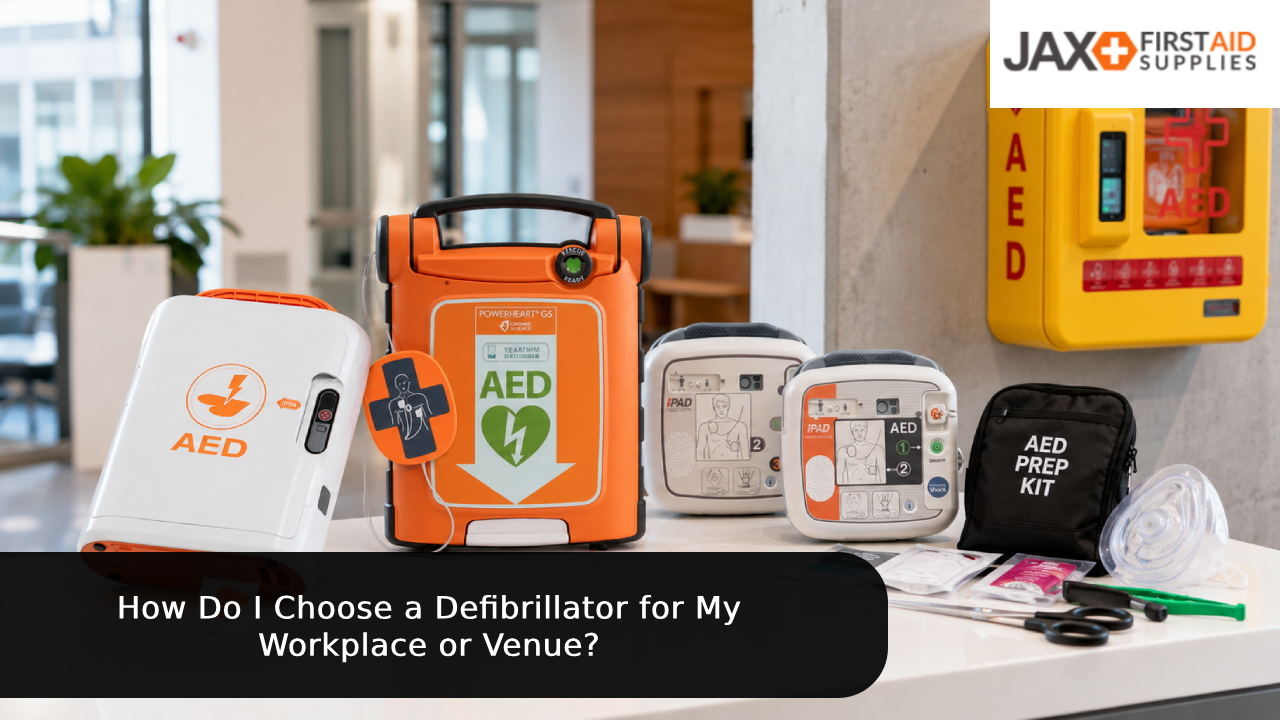
How to Choose a Defibrillator for Your Workplace or Venue
Buying a defibrillator for a workplace, school, gym, public venue, warehouse, office, factory, sports club or community space can feel complicated at first. There are different AED models, cabinet options, pads and batteries, training devices, semi-automatic and fully automatic choices, plus questions around maintenance, signage, registration and where the defibrillator should be kept.
This AED buyer’s guide explains how to choose the right defibrillator for your site, what you need to consider before buying a defibrillator, what accessories are worth ordering at the same time, and how to keep the device ready for cardiac emergencies.
An AED, or automated external defibrillator, is a medical device designed to analyse a person’s heart rhythm during sudden cardiac arrest and, where required, deliver a shock to the heart. Used alongside CPR, quick access to an AED can help give a casualty the best chance of survival while an ambulance is on the way.
Quick Answer: What AED Should a Workplace Buy?
The right defibrillator for your workplace depends on who may need to use it, where it will be stored, how public the site is, whether children may be present, and whether you need a semi-automatic or fully automatic defibrillator.
Most workplaces and venues should look for an AED that is simple to use, gives clear voice and visual prompts, has reliable pads and batteries, and can be stored in a visible wall bracket or suitable AED cabinet. If the defibrillator may be used by the public, clear signage and registration on the national defibrillator network should also be considered.
Shop relevant AED supplies: defibrillators, pads and accessories, AED cabinets and storage and AED trainers.
What Is an AED Defibrillator?
An AED is an automated external defibrillator. It is designed to be used during sudden cardiac arrest, when a casualty is unresponsive and not breathing normally. The device analyses the casualty’s heart rhythm and decides whether defibrillation is needed.
If a shock is required, the defibrillator gives voice prompts, visual instructions or both. A semi-automatic defibrillator will usually tell the user when to press a button to deliver a shock. A fully automatic defibrillator will deliver the shock automatically if the device determines it is needed.
AEDs are designed to support rescuers during a stressful emergency. They do not replace CPR, but they work alongside CPR. In the first few minutes of a cardiac arrest, CPR and fast defibrillation can be the difference between life and death.
Does Every Workplace Need a Defibrillator?
There is not a blanket UK legal requirement that every workplace must have a defibrillator. However, many employers, schools, gyms, sports clubs, public venues and organisations choose to install an AED because it strengthens emergency preparedness and gives staff, visitors and members of the public quicker access to potentially life-saving equipment.
The right decision should be based on your first aid needs assessment, the size of your premises, the number of people on site, how easy it is for ambulance services to reach you, whether the public visit, and whether the site has higher-risk users or activities.
Sites that may be more likely to need the defibrillator include:
- Large workplaces with many employees
- Factories, warehouses and industrial sites
- Gyms, leisure centres and sports clubs
- Schools, colleges and universities
- Public venues, churches, halls and community buildings
- Hotels, retail parks and visitor attractions
- Remote or rural workplaces where ambulance response may take longer
- Sites with older workers, visitors or higher footfall
- Locations where members of the public are present daily
Why Buying a Defibrillator Is Worth Considering
Sudden cardiac arrest can happen anywhere. It can affect a member of staff, visitor, customer, contractor, student, gym user, spectator or member of the public. When it happens, fast action matters.
A defibrillator can help by analysing the casualty’s heart rhythm and, if required, delivering a controlled electric shock. CPR keeps blood and oxygen moving around the body, while defibrillation may help restore a shockable rhythm.
For workplace safety, having quick access to an AED gives first aiders and bystanders a clearer emergency response route. It also shows that the organisation has considered serious cardiac emergencies as part of wider health and safety planning.
Semi-Automatic vs Fully Automatic Defibrillator
One of the first decisions when choosing the right AED is whether to buy a semi-automatic or fully automatic model.
Semi-Automatic Defibrillator
A semi-automatic defibrillator analyses the heart rhythm and, if a shock is advised, prompts the user to press a button. Some workplaces prefer this because the rescuer stays in control of when the shock is delivered.
Fully Automatic Defibrillator
A fully automatic defibrillator analyses the heart rhythm and can deliver a shock automatically if required. It still gives prompts so people know that the defibrillator is preparing to shock.
Both types are designed to be simple to use. The right defibrillator depends on your site, your users, your first aid training arrangements and how confident you expect rescuers to be during an emergency.
Product Pick: iPAD SP1 Defibrillator
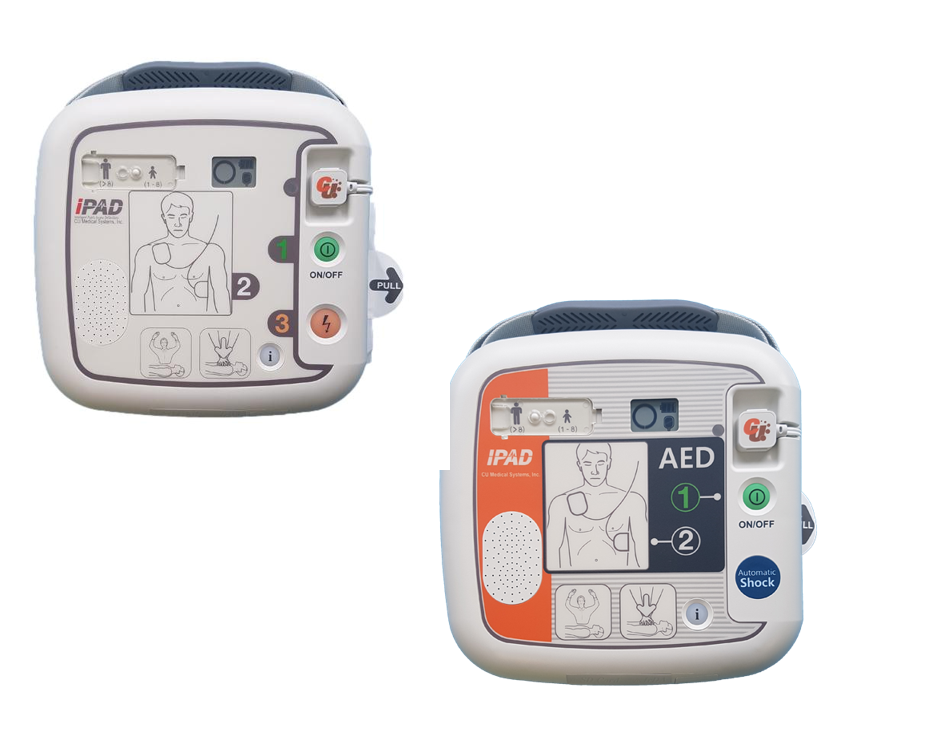
iPAD SP1 Defibrillator
The iPAD SP1 is a strong option for workplaces, schools and public areas that want a clear, user-friendly AED with semi-automatic and fully automatic options.
Best use cases: offices, factories, schools, sports clubs, community buildings, visitor venues and public access defibrillator points.
What Should You Consider Before Buying a Defibrillator?
Choosing the right AED is easier when you break the decision down into practical buying questions. Do not just buy the cheapest automatic defibrillator. Think about where it will be used, who will access it and how it will be maintained.
1. Who Is Likely to Use the Defibrillator?
If trained first aiders are usually on site, they may be more confident using an AED. If the device is for public access, ease of use becomes even more important. Look for voice prompts, visual prompts, simple pad placement diagrams and clear instructions.
2. Where Will the Defibrillator Be Kept?
Where should a defibrillator be kept? The best location is visible, easy to access and close to where people are most likely to need it. For fixed-location defibrillators, storage should usually be near reception, a first aid point, security desk, sports entrance, gym floor, warehouse office, staff area or public access entrance.
3. Is the AED for Indoor or Outdoor Use?
If your AED is stored indoors, a wall bracket or indoor cabinet may be enough. If it is outdoors, in a yard, car park, school gate, sports facility or public-access location, you may need a heated or weather-resistant cabinet to protect it from cold, dust and water.
4. Will Children Be Present?
If children may be present, check whether the AED has paediatric pads, a child mode or an adult/paediatric switch. A paediatric option is particularly useful for schools, nurseries, leisure centres, sports clubs, community venues and family-facing businesses.
5. What Accessories Will Need Replacing?
Defibrillator pads and batteries have a shelf life and need to be replaced. Depending on the model, pads may need replacing after use or when they expire. Batteries also need checking. A good AED buying decision should include the ongoing cost of pads and batteries, not just the device price.
Choosing the Right AED for Different Sites
The best AEDs for one site may not be the best AEDs for another. A small office has different needs from a football club, factory, university campus or outdoor community defibrillator point.
Defibrillators for Offices
An office AED should be simple, visible and easy for staff or visitors to access. Pair it with clear AED signage, a wall bracket or cabinet, and first aid training to ensure staff understand CPR and AED basics.
Defibrillators for Factories and Warehouses
Factories and warehouses may need quick access across larger floor areas. A central AED may not be enough if the site has multiple buildings, loading areas, offices and production zones. Consider the distance from each work area to the AED and whether additional signage is needed.
Defibrillators for Schools and Colleges
Schools and colleges should consider staff, pupils, visitors, sports areas, halls and public events. A paediatric option may be important, and the defibrillator should be included in first aid and emergency planning.
Defibrillators for Gyms and Sports Venues
Gyms, sports clubs, stadiums and leisure centres often have high physical activity levels and public access. The defibrillator should be easy to reach from changing rooms, courts, pitches, gym floors and spectator areas.
Defibrillators for Public Venues
Public venues need simple access, clear signage and a storage location that visitors, staff, security or first responders can find quickly. Public access defibrillator points should also consider registration, cabinet security and whether emergency services can direct callers to the AED.
Product Pick: Mediana A16 HeartOn AED

Mediana A16 HeartOn AED - Semi Automatic
A compact AED option for workplaces and venues looking for a semi-automatic defibrillator with clear prompts and adult/paediatric functionality.
Best use cases: offices, warehouses, schools, gyms, sports clubs, public venues, factories and community sites.
How Much Does a Defibrillator Cost?
How much does a defibrillator cost? The answer depends on the model, brand, features, warranty, paediatric capability, battery life, accessories and whether you also need a cabinet. Many workplace AEDs cost more than a standard first aid kit, but the buying decision should consider readiness, reliability and access in an emergency.
When comparing prices, consider the full setup:
- AED defibrillator unit
- Adult pads
- Paediatric pads or child mode where needed
- Battery or battery pack
- Wall bracket or AED cabinet
- Appropriate signage
- Inspection tags
- AED prep kit
- Replacement pads and batteries
- AED trainer for staff practice
Shop the full AED range here: defibrillators, AED pads and accessories, AED cabinets and storage and AED trainers.
Where Should a Defibrillator Be Kept?
The best defibrillator location is somewhere visible, accessible and known to staff. If the AED is hidden in a locked office, it may not be reached quickly when every second counts.
Good AED locations include:
- Reception or front desk
- Security desk or gatehouse
- First aid room or first aid station
- Warehouse office or loading bay entrance
- Factory floor entrance
- Sports hall, gym or leisure centre reception
- School office or main hall area
- Community building entrance
- Public access entrance or external wall point
People need to know that the defibrillator is available. Use appropriate signage so staff, visitors and first responders can find it. For public-access AEDs, clear signage and registration can help ambulance services direct callers to the device.
AED Cabinets, Wall Brackets and Outdoor Storage
Storing your defibrillator correctly helps protect it and makes it easier to find. Indoor locations may only need a wall bracket, indoor cabinet or alarmed wall cabinet. Outdoor or public access locations usually need a stronger cabinet to protect against weather, dust and water.
AED cabinets can help with:
- Visibility
- Security
- Weather protection
- Temperature control
- Public access
- Protecting the AED from accidental damage
Browse AED storage options here: AED cabinets and storage.
Product Pick: Polycarbonate Outdoor AED Cabinet

Polycarbonate Outdoor AED Cabinet
A robust outdoor AED cabinet for sites that need public access, visibility, protection and reliable defibrillator storage.
Best use cases: public venues, schools, sports clubs, community buildings, factories, outdoor yards, business parks and public access defibrillator points.
Do Defibrillators Need to Be Registered?
Defibrillators need to be registered where possible so ambulance services can locate them during an emergency. In the UK, The Circuit is the national defibrillator network. Registering a public access defibrillator helps ambulance call handlers know that the defibrillator exists, where it is, and when it may be available.
If your organisation installs a defibrillator, registration should be part of the setup process. It is also important to keep the record updated if the defibrillator is moved, access times change, pads and batteries are replaced, or the AED is temporarily unavailable.
Defibrillator Maintenance: What Needs Checking?
Defibrillator maintenance is usually straightforward, but it must not be ignored. Even if the defibrillator performs self-checks, someone should still be responsible for routine visual checks and replacement planning.
Check the following:
- Is the AED in the correct location?
- Is the status indicator showing ready?
- Are the pads sealed and in date?
- Is the battery in date and correctly fitted?
- Is the cabinet clean, visible and accessible?
- Is the cabinet locked or unlocked as intended?
- Is the signage still clear?
- Is the AED registered and up to date?
- Are inspection tags or check records being completed?
- Has the AED been checked after use?
Useful products include Defibrillator AED Inspection Tags, Defibrillator AED Prep Kit and replacement pads and accessories.
Defibrillator Pads and Batteries
Defibrillator pads and batteries are essential parts of your AED setup. The device may be present, but if pads are expired or a battery has failed, the AED may not be ready when needed.
Before buying, check:
- How long do the adult pads last?
- Are paediatric pads needed?
- Does the model use a battery pack?
- What is the battery shelf life?
- Are replacement pads easy to order?
- Does the AED self-test pads and batteries?
- How will checks be recorded?
If your workplace, school or venue has an AED, keep replacement pads and batteries on your restock list. Browse options here: AED pads and accessories.
AED Signage and Public Access
Appropriate signage helps people find an AED quickly. A sign should make the defibrillator location obvious and should be visible from the routes people are likely to take in an emergency.
For public access locations, signage is especially important. People may not know where the AED is unless signs guide them. If the defibrillator is being accessed by a bystander, clear signs and simple instructions can save valuable time.
Useful add-ons include:
- AED Nearest Defibrillator Sign 300 x 200mm s/a
- AED Defibrillator Sign - Pre-Drilled PVC 3D Projecting
- Defibrillator AED Inspection Tag
- Defibrillator AED Prep Kit
Should Staff Have Defibrillator Training?
AEDs are designed to be used by people with little or no previous experience, but defibrillator training can improve confidence. If your site has first aiders, security staff, reception teams, gym staff, teachers, event staff or public-facing workers, AED and CPR awareness is a sensible investment.
Defibrillator training to ensure staff know how to respond should include:
- Recognising sudden cardiac arrest
- Calling 999
- Starting CPR
- Sending someone to get a defibrillator
- Opening the AED and following prompts
- Pad placement
- Safety while the AED analyses
- What to do if the device says “shock advised”
- What to do after a shock is delivered
First aid training and AED practice are especially useful for staff who may be expected to respond before emergency services arrive.
Product Pick: Prestan AED Ultra Trainer
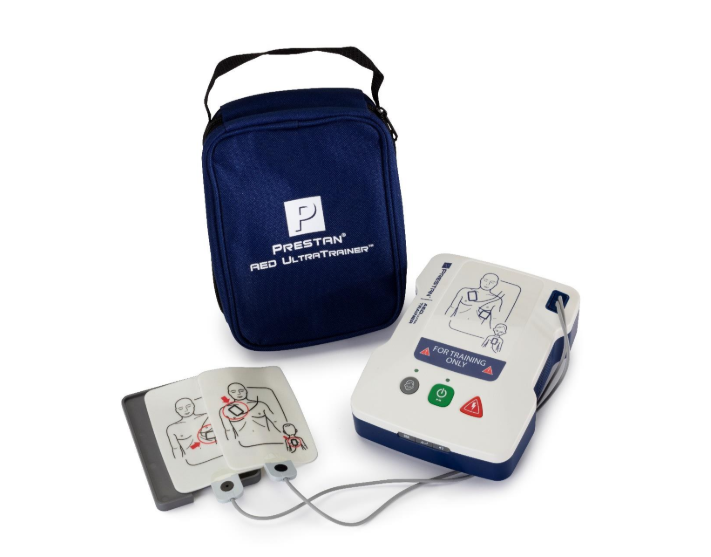
Prestan AED Ultra Trainer
A training AED designed for first aid trainers, workplaces and training providers who want realistic AED practice without using a live defibrillator.
Best use cases: first aid training, workplace AED awareness, CPR courses, schools, gyms, sports clubs and staff refresher sessions.
Best AED Buying Checklist
Use this checklist when choosing the right AED for your organisation.
Before Buying a Defibrillator, Check:
- Is the AED for a workplace, school, venue, gym, public space or outdoor location?
- Who is most likely to use a defibrillator on site?
- Do you prefer a semi-automatic or fully automatic defibrillator?
- Are children likely to be present, requiring paediatric pads or child mode?
- Does the AED give clear voice prompts and visual prompts?
- Will the AED be stored indoors or outdoors?
- Do you need a wall bracket, indoor cabinet or outdoor heated cabinet?
- Are pads and batteries easy to replace?
- What is the shelf life of the pads and battery?
- Will people know that the defibrillator is available?
- Is appropriate signage included?
- Who will oversee defibrillator maintenance?
- Will the AED be registered on the national defibrillator network?
- Do staff need AED and CPR training?
Common AED Buying Mistakes
The most common mistake is buying a defibrillator without planning where it will go, who will check it and how people will find it. A high-quality AED still needs good placement, signage and maintenance.
Avoid these mistakes:
- Buying an AED but not telling staff where it is
- Storing the AED in a locked room with limited access
- Forgetting to check pads and batteries
- Not ordering a cabinet for outdoor storage
- Not using AED signage
- Not considering paediatric use where children are present
- Not registering the AED where appropriate
- Assuming one AED is enough for a very large site
- Not training staff in CPR and AED awareness
Recommended AED Products From Jax First Aid
Jax First Aid supplies defibrillators, AED cabinets, pads, batteries, AED signs, inspection tags, prep kits and AED trainers for UK workplaces, schools, sports clubs, public venues and first aid trainers.
Defibrillators
Shop AEDs for workplaces, venues, schools, sports clubs and public access points.
Pads and Accessories
Order replacement AED pads, batteries, prep kits and inspection products.
Cabinets and Storage
Protect your AED with indoor, outdoor, lockable, alarmed or heated storage options.
AED Trainers
Training devices for CPR courses, workplace practice and first aid trainers.
Final Thoughts: Choose the Right Defibrillator Before It Is Needed
Buying a defibrillator is not just about choosing a device. It is about making sure your workplace or venue has quick access to an AED, clear signage, suitable storage, replacement pads and batteries, and a plan for defibrillator maintenance.
The right AED should be easy to use, easy to find and ready when needed. For many sites, that means pairing the defibrillator with an AED cabinet, inspection tag, signage, training device and clear internal procedure.
Jax First Aid supplies defibrillators, AED pads and accessories, defibrillator cabinets and AED trainers for workplaces, venues, schools, sports clubs, public sites and first aid trainers across the UK.
Need an AED for Your Workplace or Venue?
Shop defibrillators, AED cabinets, pads, batteries, signage, inspection tags and AED trainers from Jax First Aid.
Shop Defibrillators Shop AED Cabinets Shop AED Trainers Ask About Bulk Orders
Frequently Asked Questions
What is the best AED for a workplace?
The best AED for a workplace is one that is easy to use, clearly visible, simple to maintain and suitable for the people on site. Employers should consider semi-automatic or fully automatic operation, paediatric capability, pads and batteries, signage, storage and training needs.
Is a defibrillator a legal requirement in UK workplaces?
There is not a blanket legal requirement for every UK workplace to have a defibrillator. However, many organisations choose to provide one as part of first aid and emergency preparedness, especially where there are many staff, visitors or members of the public.
What is the difference between a semi-automatic and fully automatic defibrillator?
A semi-automatic defibrillator prompts the user to press a button when a shock is advised. A fully automatic defibrillator can deliver the shock automatically when required, while still giving prompts and warnings.
Where should a defibrillator be kept?
A defibrillator should be kept in a visible, accessible location such as reception, a first aid point, security desk, sports entrance, warehouse office or public access entrance. Outdoor AEDs should usually be stored in a suitable cabinet.
Do defibrillators need to be registered?
Defibrillators should be registered where possible so ambulance services can locate them during an emergency. In the UK, The Circuit is the national defibrillator network used to help ambulance services identify nearby AEDs.
Do AED pads and batteries expire?
Yes. AED pads and batteries have a shelf life and need to be checked and replaced when used, damaged or expired. The replacement schedule depends on the AED model and manufacturer instructions.
Can anyone use a defibrillator?
AEDs are designed to be used by trained responders and bystanders. The device gives prompts and will only advise or deliver a shock if it detects a shockable heart rhythm. CPR and AED training can improve confidence.
Should a workplace buy an AED trainer too?
An AED trainer is useful for staff training because it allows people to practise AED use without using a live medical device. AED trainers are also important for first aid trainers delivering CPR and AED courses.
Can Jax First Aid supply AEDs, cabinets and accessories in bulk?
Yes. Jax First Aid supplies defibrillators, AED cabinets, pads, batteries, signage, inspection tags, AED prep kits and AED trainers for UK workplaces, schools, sports clubs, venues and public access sites.